
Why Western CEOs Are Now Coming to Asia to Learn?
By Nassera Tahanout
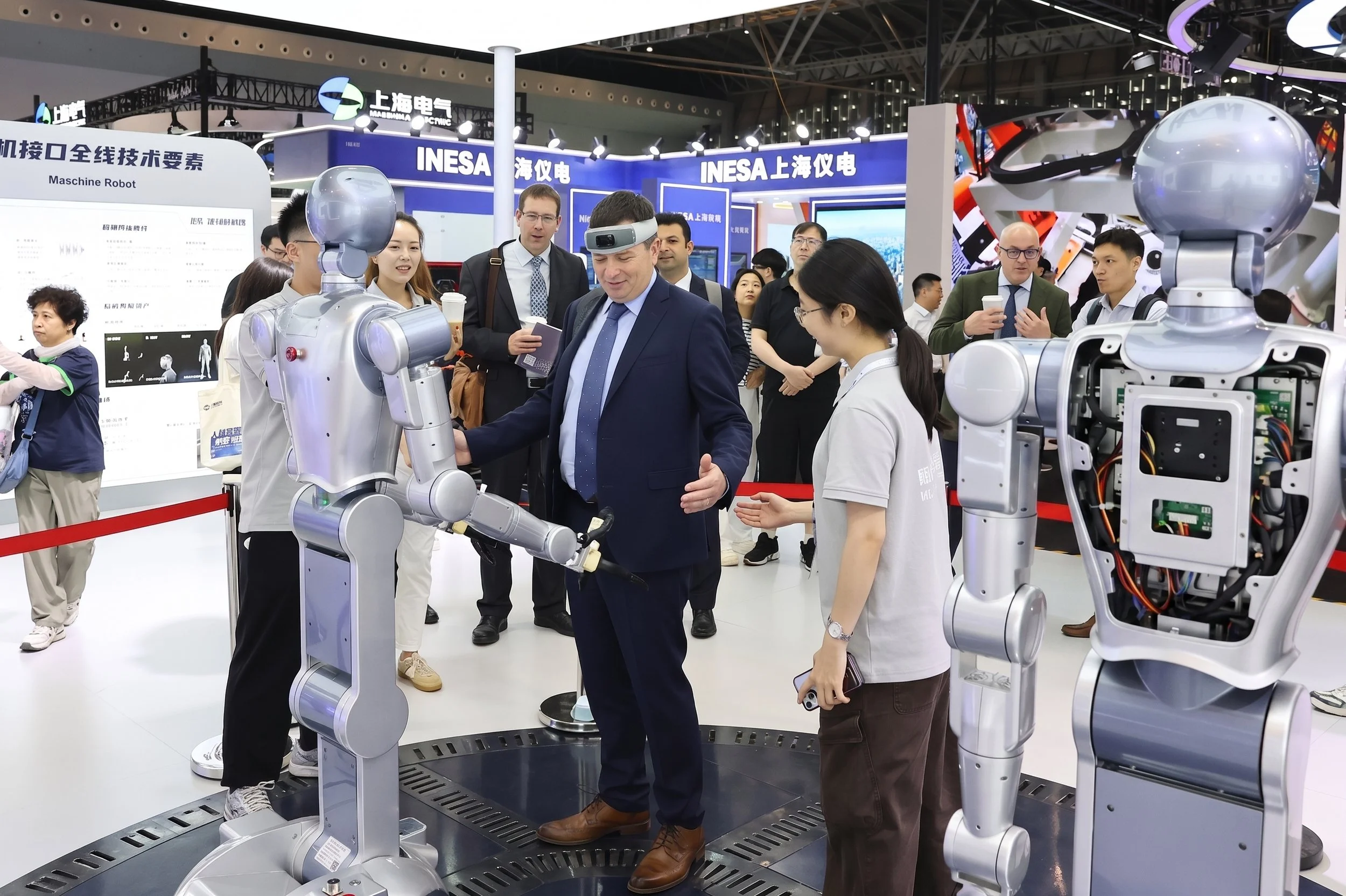
A Western CEO tests an INESA humanoid robot at the Shanghai International Technology Fair — a firsthand look at the AI and robotics innovation drawing global executives to China.
The Global Innovation Map Has Changed
For decades, innovation followed a familiar path. Management theories emerged from American business schools, Silicon Valley set the pace for technological disruption, and Western corporations exported best practices to the rest of the world.
Today, that flow of knowledge is increasingly moving in a different direction – from Asia outward. When a region controls 45% of the world's R&D investment, it doesn't just build products designed elsewhere – it starts setting the direction for what gets built next. That's the infrastructure behind the reverse innovation flow: Xiaomi's speed-to-market playbooks are now case studies at Harvard Business School and INSEAD; India's frugal engineering principles ("Jugaad innovation") have been profiled repeatedly in MIT Sloan Management Review and shape programs like Stanford's Extreme Affordability initiative. TikTok's short-form format, built by ByteDance, is the template Meta and YouTube are now chasing rather than the other way around. And in January 2025, a lab in Hangzhou – DeepSeek – released an AI model built at a fraction of the cost of its Western rivals, wiping out roughly $600 billion of Nvidia's market value in a single day. With that, a growing number of executives are travelling to Shenzhen, Seoul, and Singapore not simply to expand their businesses, but to understand how some of the world's most advanced economies are deploying technology at scale, accelerating innovation cycles, and transforming industries faster than many of their Western counterparts.

TikTok, built by ByteDance, exemplifies how Asian innovation is now setting the pace that Western platforms are following.
The attraction is not merely Asia's economic growth. It is the region's ability to move from concept to implementation with remarkable speed.
The West isn't standing still on AI – American labs lead in foundation model development, and U.S. and European firms are pouring unprecedented capital into the technology. But there's a gap between building the technology and living inside it. In China, South Korea, and Singapore, AI, automation, and smart infrastructure aren't pilot programs debated in strategy decks – they're already running the everyday machinery of commerce and government. Baidu's Apollo Go operates paid, driverless robotaxi rides across Beijing, Wuhan, and Shenzhen, as CNBC recently reported. Singapore's Smart Nation platform folds government services – from childcare enrollment to tax filing – into a single digital identity system, Singpass, used daily by most citizens. South Korea's factories run the highest robot density per capita in the world.
With this shift, increasingly, Western leaders are looking East to understand how the future of business is being built today.
The New Competitive Advantage: Execution Speed
Innovation is often associated with breakthrough ideas. Yet in today's business environment, especially, execution matters just as much as invention.
A company may develop a promising technology, but the real competitive advantage comes from deploying it rapidly, refining it through real-world use, and scaling it across an organization. This is where many Asian economies have developed a distinct advantage.
And none of this happened by accident. China, South Korea, and Singapore have spent years investing in digital infrastructure, advanced manufacturing, talent development, and public-private collaboration – building ecosystems where new technologies move from pilot to large-scale deployment considerably faster than in many Western markets. The Global Innovation Index 2025 reflects this: Singapore ranks among the world's leading innovation economies (5th globally), China remains the only middle-income economy consistently placed among the global innovation leaders, and South Korea continues to distinguish itself through research intensity and advanced manufacturing (4th globally).
The lesson for executives is becoming clear. The future belongs not only to those who innovate first, but to those who scale fastest.
Shenzhen: Artificial Intelligence at Industrial Scale
No city better illustrates the speed of AI deployment than Shenzhen – China's hardware capital, with Beijing serving as its research core. Over the past decade, China has built one of the world's largest digital ecosystems, powered by a massive consumer market, world-class mobile infrastructure, and sustained investment in science, engineering, and innovation.
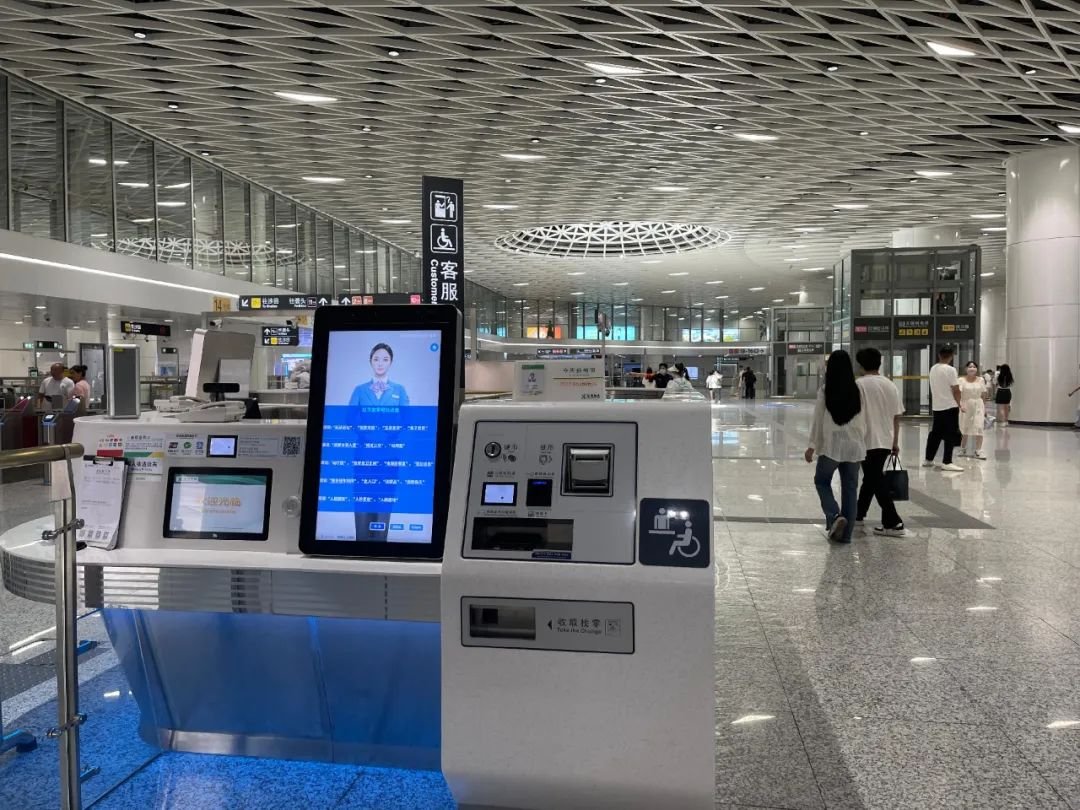
An AI-powered customer service counter at Gangxia North Metro Station in Shenzhen — one of the city's busiest transit hubs and a symbol of its tech-driven infrastructure.
This transformation has been underpinned by an extraordinary expansion of higher education. According to UNESCO's 2026 Global Education Monitoring Report, the number of students enrolled in higher education in China has grown from 3.9 million in 1990 to more than 61 million in 2024, making it one of the largest and fastest-growing talent pipelines in the world. Combined with decades of investment in STEM education, this workforce has become a key driver of China's leadership in artificial intelligence and advanced manufacturing.
China is now translating this talent advantage into industrial leadership. According to the Stanford AI Index Report 2025, the country ranks among the global leaders in AI research output, AI patents, and the development of advanced AI models. More importantly, companies headquartered in Shenzhen and across the Greater Bay Area are integrating AI at scale across logistics, manufacturing, finance, healthcare, and retail, transforming artificial intelligence from a standalone technology into a core business capability.
What often surprises visiting executives is not the sophistication of the technology itself, but, as mentioned above, the speed at which it moves from experimentation to large-scale implementation. Chinese companies routinely launch new digital services to millions of users, collect real-time behavioural data, iterate rapidly, and scale successful innovations within months rather than years.
This rapid execution is particularly visible in retail, where AI-powered recommendation engines, computer vision, mobile payments, and automated fulfillment systems increasingly operate as a single, integrated ecosystem rather than isolated technologies.
It's worth noting that Shenzhen isn't China's only AI proving ground. Hangzhou – long known as Alibaba's home base – has become a second hub in its own right, nurturing a cluster of AI and robotics startups nicknamed the "Six Little Dragons,"DeepSeek among them. For executives planning a Shenzhen innovation study tour, the two cities make complementary stops: Shenzhen for hardware and manufacturing speed, Hangzhou for how a digital-economy hub reinvents itself around frontier AI.
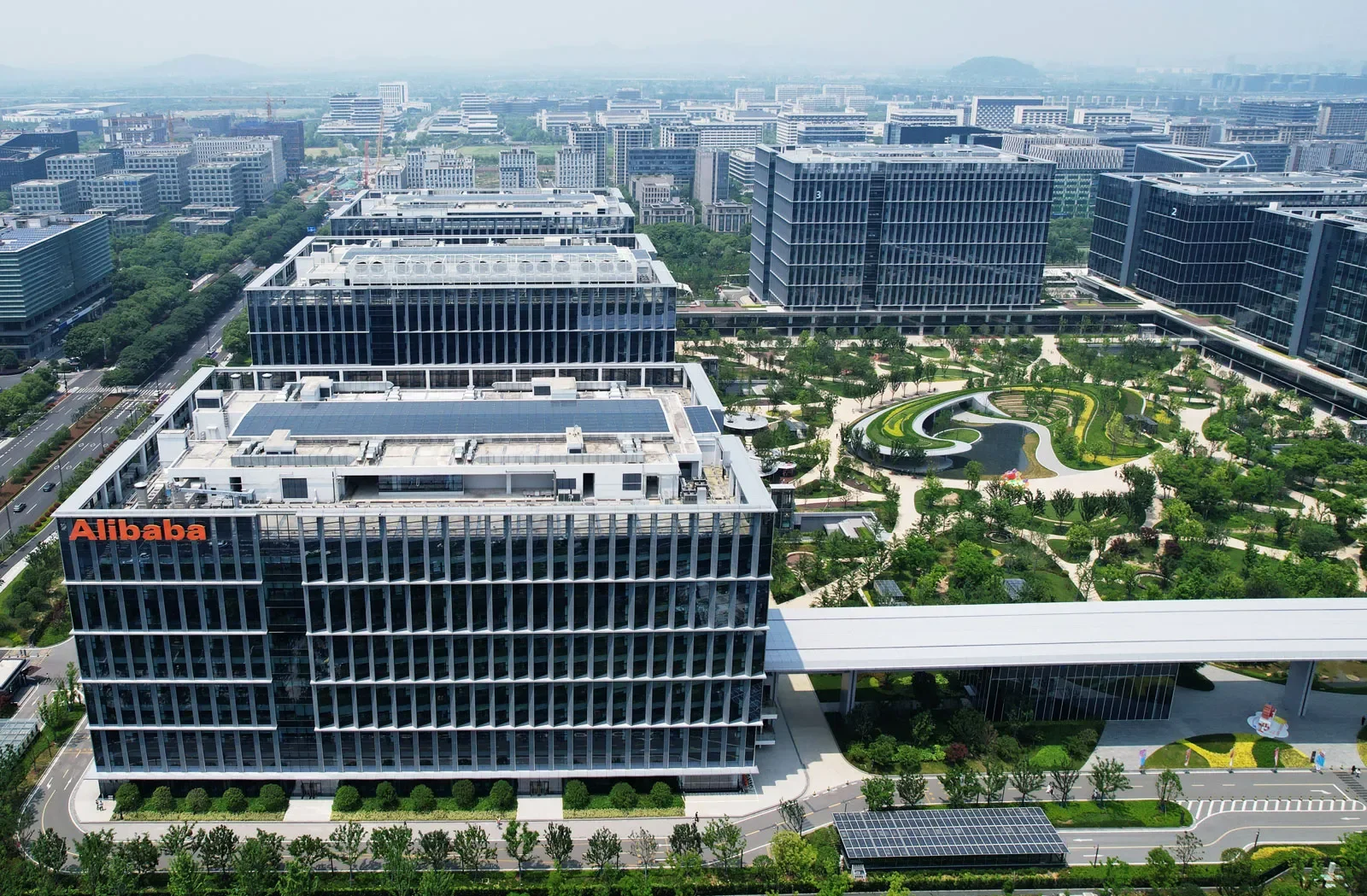
Alibaba's headquarters in Hangzhou — the city that has become a second hub for China's AI and robotics startups, alongside Shenzhen.
For Western leaders, Shenzhen's competitive advantage is not simply its ability to innovate – it is its ability to industrialise innovation at speed. The lesson is clear: competitive advantage in the AI era will belong not only to those who invent breakthrough technologies, but to those who can deploy, refine, and scale them faster than anyone else.
Seoul: The Robotics Capital
If Shenzhen demonstrates the power of AI deployment, a Seoul learning expedition offers a compelling example of how automation can transform an entire economy.
For years, South Korea – anchored by Seoul's manufacturing and electronics corridor – has pursued a long-term industrial strategy centred on automation, advanced manufacturing, and digital innovation. Today, it is the world's most robot-intensive economy. According to the International Federation of Robotics (IFR), South Korea recorded 1,220 industrial robots per 10,000 manufacturing employees in 2024 – the highest robot density globally and well above the world average. This figure has grown at an average annual rate of 7% since 2019, reflecting sustained investment in robotics, semiconductors, electronics, and automotive manufacturing.
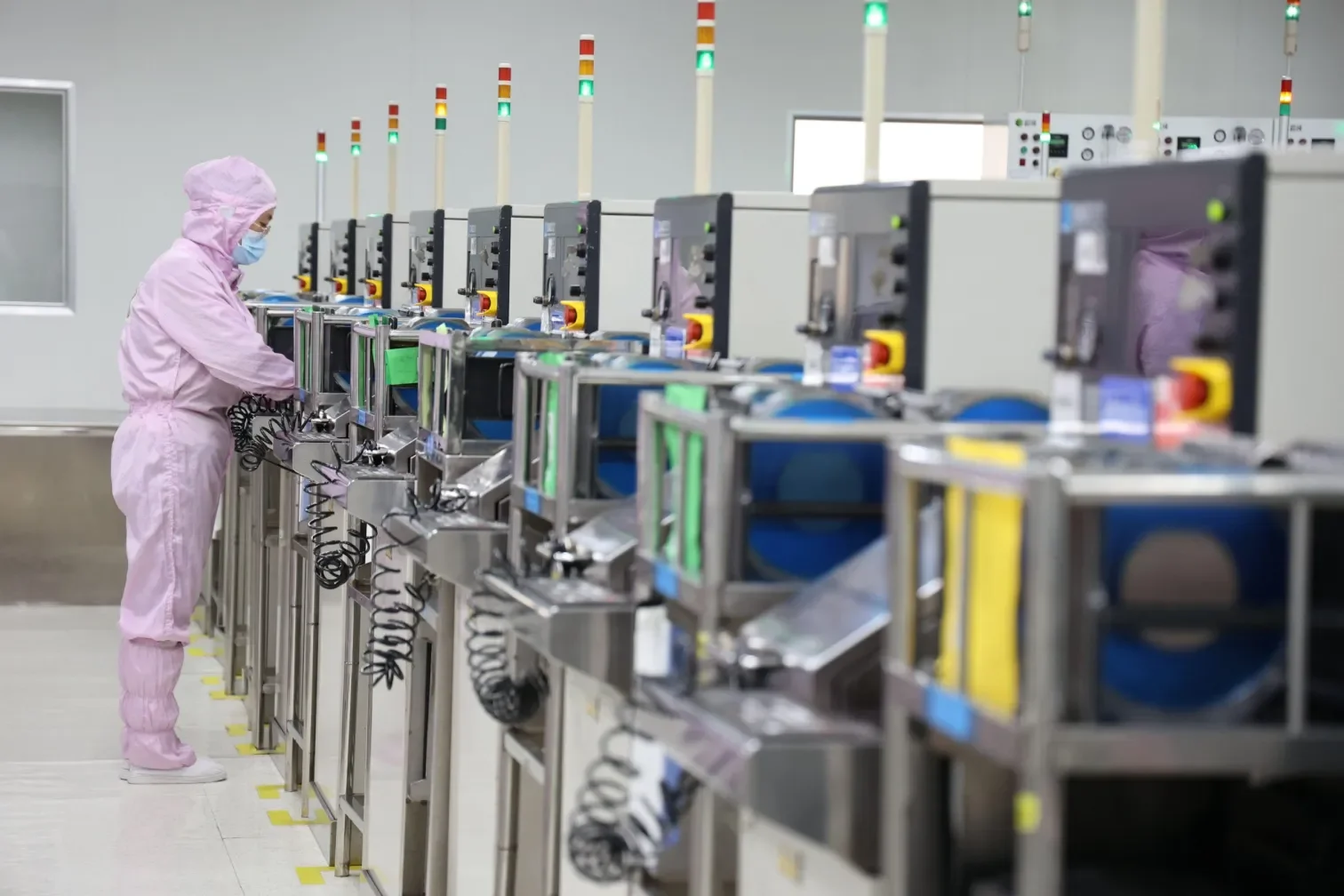
South Korea's semiconductor industry underpins its position as the world's most robot-dense manufacturing economy.
What makes Seoul particularly relevant for visiting executives is that robotics is no longer confined to factory floors. Autonomous systems are increasingly deployed across logistics, healthcare, hospitality, retail, and Incheon International Airport, while AI-powered smart factories integrate robotics, real-time data analytics, and digital twins to optimize production and strengthen operational resilience.
This transformation has been driven by close collaboration between government, research institutions, and global industrial leaders such as Samsung, Hyundai, and LG, and a growing ecosystem of technology startups. Rather than treating automation as a future ambition, South Korean companies view it as a core business capability and a strategic response to labour shortages, demographic change, and global competition.
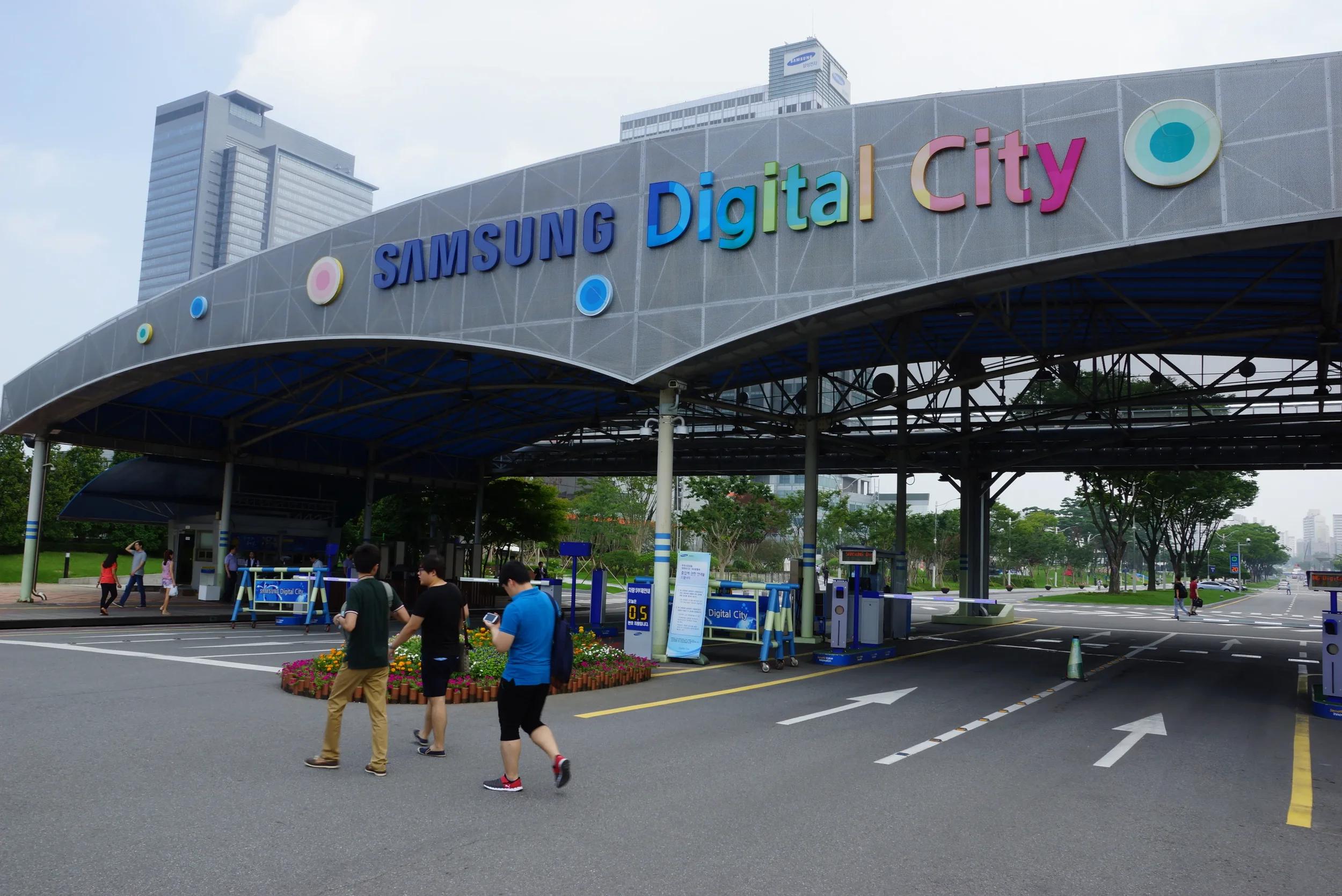
Samsung Digital City in Suwon — part of the Seoul metropolitan area's dense electronics and semiconductor manufacturing corridor.
For Western CEOs, the lesson extends far beyond robotics itself. South Korea demonstrates how consistent investment, coordinated industrial policy, and rapid technology adoption can create a highly productive manufacturing ecosystem where innovation is not only invented – it is deployed, scaled, and continuously improved.
Singapore: A Blueprint for the Future-Ready Economy
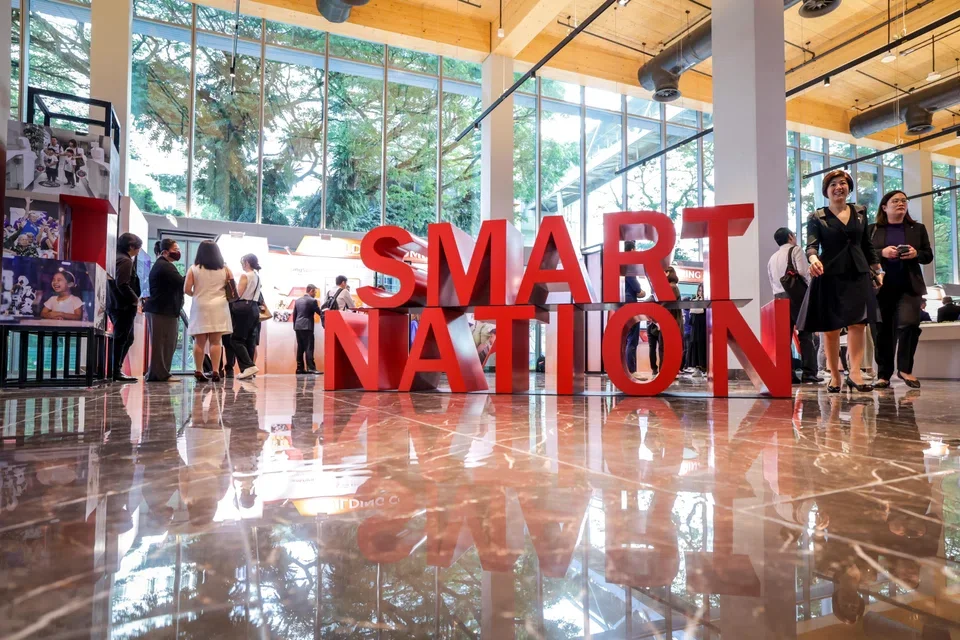
Singapore's Smart Nation initiative on display — a whole-of-government approach to digital transformation that has become a global benchmark.
While Shenzhen demonstrates the power of scale and Seoul leads in industrial automation, Singapore has become a global benchmark for building an integrated digital economy.
Rather than focusing on individual technologies, Singapore has adopted a whole-of-government approach through its Smart Nation initiative, embedding digital innovation across public services, healthcare, transportation, finance, and urban planning. The objective is not simply to digitise existing processes, but to create an ecosystem where citizens, businesses, and government interact seamlessly through secure, interoperable digital infrastructure.
One of the most visible examples is the country's digital payments ecosystem. Overseen by the Monetary Authority of Singapore (MAS), initiatives such as PayNow and the Singapore Quick Response Code (SGQR) have created one of the world's most interoperable real-time payment systems, enabling consumers and businesses to make instant cashless transactions across banks and payment providers.
Beyond payments, Singapore has also developed digital public infrastructure that supports secure digital identity as Singpass – an AI-enabled public service now used for more than 2,700 services across 800-plus government agencies and businesses – and data-driven urban management. This integrated approach, at the heart of Singapore's Smart Nation strategy, enables innovations to move rapidly from pilot projects to nationwide implementation while maintaining high standards of cybersecurity, governance, and public trust.

Singpass Mobile — Singapore's AI-enabled digital identity app, used for more than 2,700 services across 800+ government agencies and businesses.
For Western executives, Singapore offers a powerful lesson: digital transformation is most effective when technology, regulation, infrastructure, and leadership evolve together. The country's success lies not in adopting the latest technologies, but in orchestrating them into a coherent ecosystem that accelerates innovation, improves resilience, and enhances the user experience.
While Shenzhen, Seoul, and Singapore have each developed distinct innovation models, they share a common philosophy: technology alone is never the competitive advantage. What sets these ecosystems apart is their ability to execute rapidly, integrate innovation at scale, and continuously adapt to change. For Western CEOs, these experiences offer five strategic lessons that extend far beyond Asia.
Five Lessons Western CEOs Can Learn from Asia
For Western CEOs, the value of looking at Shenzhen, Seoul, and Singapore is not to replicate individual technologies or business models. It is to understand the operating principles that allow these ecosystems to transform technological advances into measurable economic impact.
1. Innovation Is Operational
Technology creates value only when it becomes embedded into daily business operations.
One of the most important lessons from Asia is the shift from innovation as a research activity to innovation as an operating capability. Leading Asian economies have built environments where artificial intelligence, robotics, and digital platforms are rapidly integrated into manufacturing, retail, logistics, and public services.
China illustrates this transformation particularly well. According to the Stanford AI Index Report 2025, China remains one of the world's leading contributors to artificial intelligence research and development. The country also accounted for the largest share of AI-related patent activity globally, demonstrating its ability to translate scientific investment into technological applications.
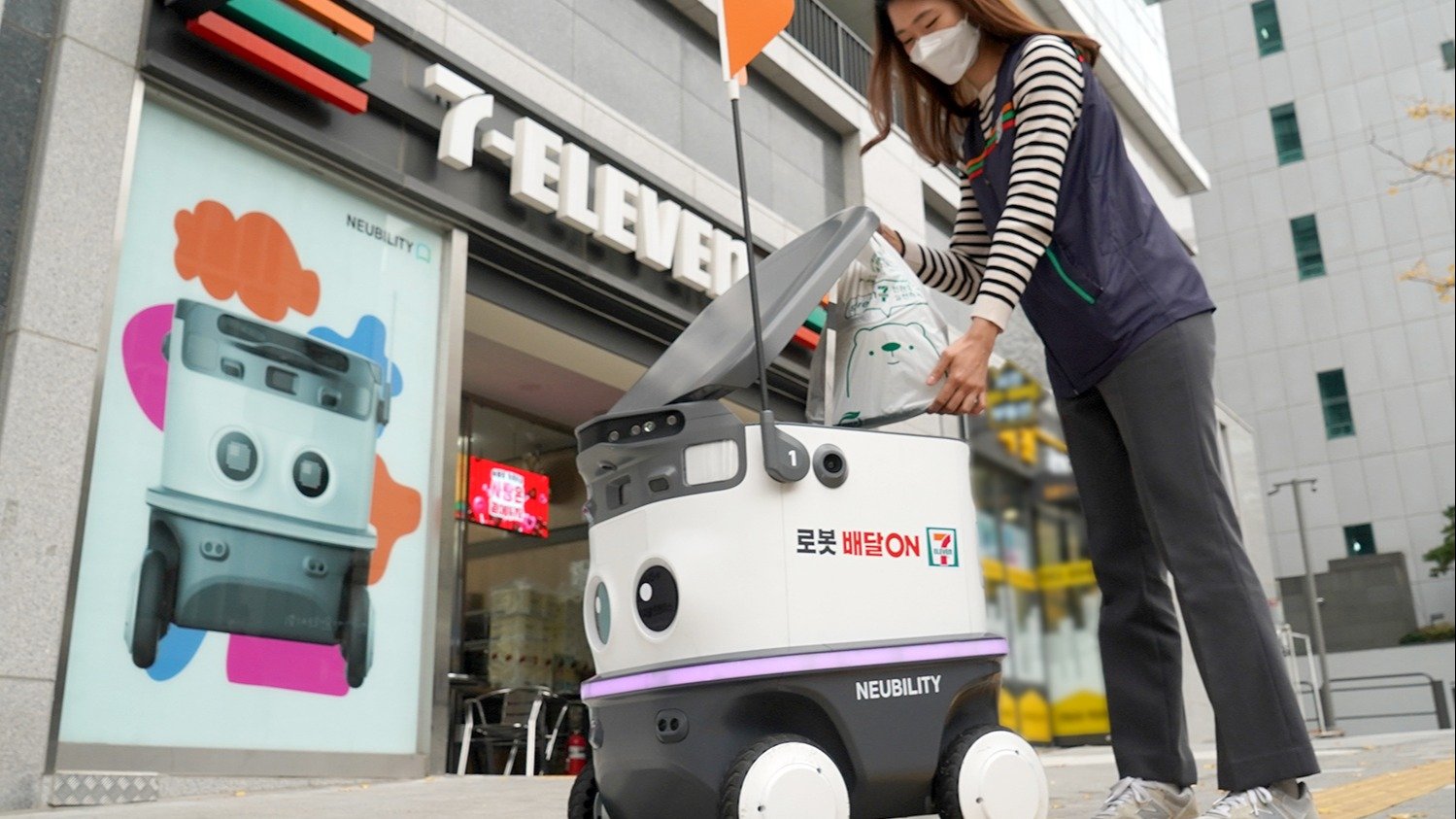
A Neubility delivery robot outside 7-Eleven in South Korea — part of the country's growing rollout of autonomous last-mile delivery in dense urban areas.
South Korea provides another example through industrial automation. According to the International Federation of Robotics (IFR), South Korea reached 1,220 industrial robots per 10,000 manufacturing employees in 2024, the highest robot density in the world.
"AI will reshape every software category and every business, including our own." — Satya Nadella, Microsoft, 2023 shareholder letter
2. Speed Matters
In a world defined by technological acceleration, the ability to test, learn, and adapt quickly has become a strategic advantage.
Asia's leading innovation ecosystems demonstrate that speed does not come from rushing decisions. It comes from creating environments where organisations can experiment, collect data, improve solutions, and scale successful innovations efficiently.
China's digital economy provides a powerful example. According to the China Internet Network Information Center (CNNIC), China had more than 1.1 billion internet users in 2024, creating one of the world's largest digital environments for testing and scaling new services.
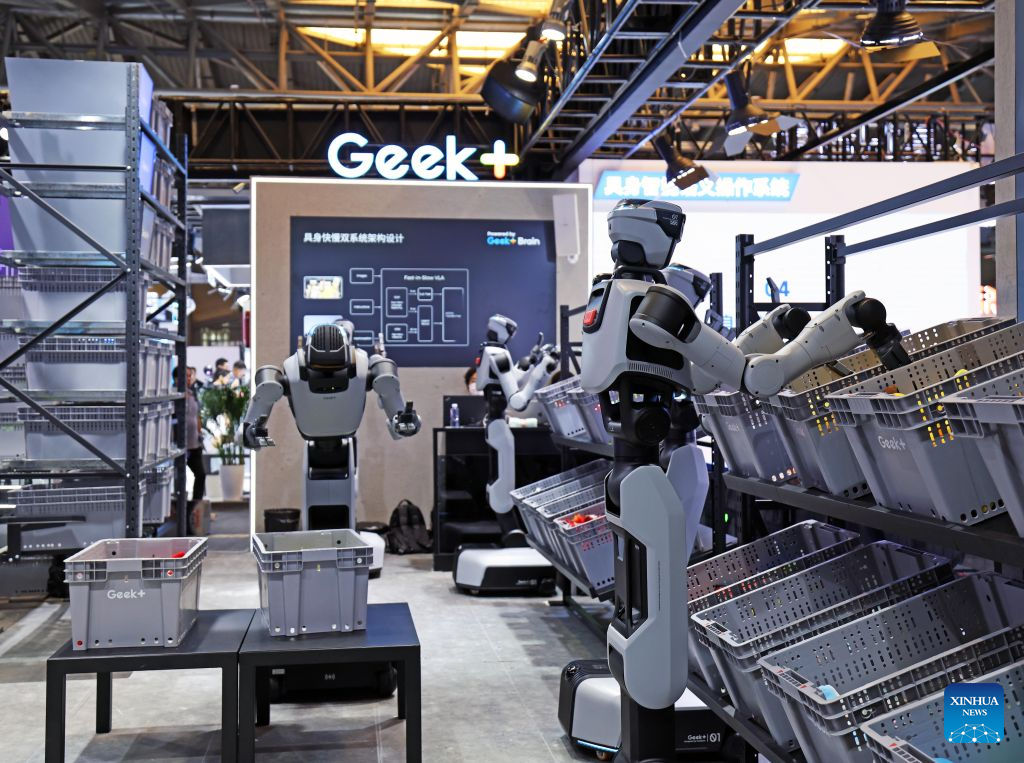
Geek+, a Beijing-based robotics company, demonstrates its humanoid warehouse robots — part of China's rapid push to deploy AI-driven automation at industrial scale.
This massive user base enables companies to analyse consumer behaviour, improve digital products, and deploy solutions across a national market at unprecedented scale.
Singapore applies a similar philosophy in the public sector. Through the Smart Nation initiative, digital solutions are developed through experimentation and then scaled across government services, healthcare, transportation, and urban management. Nvidia CEO Jensen Huang has made a related point about individuals: he's argued the real risk isn't losing your job to AI – it's losing it to a colleague who has learned to use AI well. The same logic scales to companies.
3. Ecosystems Beat Individual Technologies
The most successful innovation economies do not rely on a single breakthrough technology. They build interconnected ecosystems where multiple capabilities reinforce each other.
China's AI ecosystem combines computing infrastructure, digital platforms, consumer data, and advanced logistics networks. South Korea connects robotics, semiconductors, artificial intelligence, and smart manufacturing. Singapore integrates digital identity, payments, government services, and urban infrastructure.
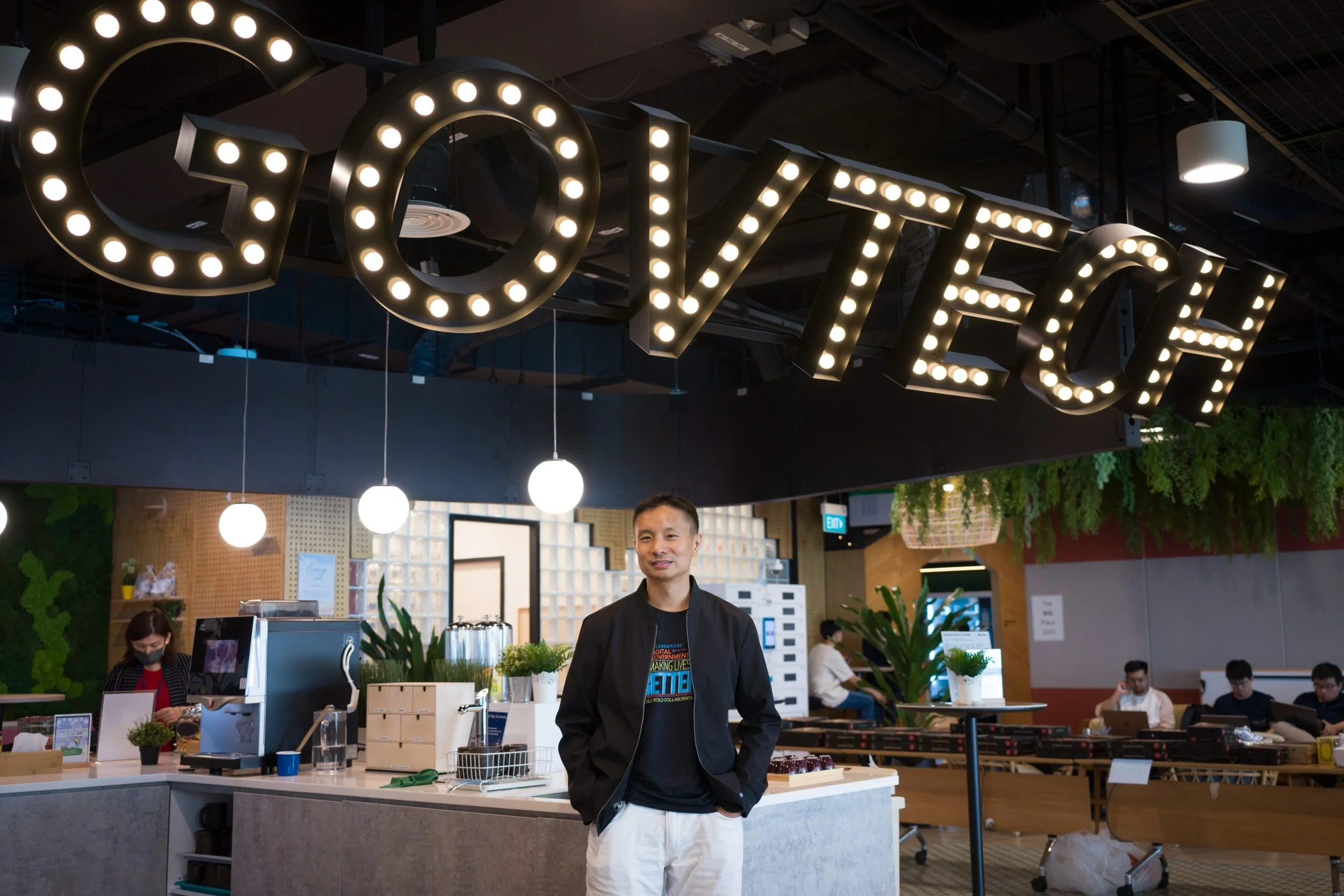
Inside GovTech, the Government Technology Agency of Singapore behind Singpass and the country's digital public infrastructure.
A strong example is Singapore's digital identity platform, Singpass. Developed by the Government Technology Agency of Singapore (GovTech), Singpass enables citizens and businesses to securely access thousands of digital services across public and private organisations.
The platform illustrates a broader principle: digital transformation accelerates when the underlying infrastructure is designed to enable collaboration between different actors.
"Every company is now a software company." — Satya Nadella, Microsoft
4. Long-Term Vision Enables Faster Execution
One of Asia's defining strengths is the ability to combine long-term strategic direction with rapid implementation. China, South Korea, and Singapore have all developed national strategies focused on digital transformation, advanced manufacturing, artificial intelligence, and innovation capacity.
Singapore's Smart Nation strategy, launched in 2014, demonstrates how long-term planning can create the foundations required for rapid innovation. By investing early in digital identity, data infrastructure, cybersecurity, and digital government services, the country has created an environment where new technologies can be adopted more efficiently.
Similarly, South Korea's leadership in robotics and advanced manufacturing reflects decades of investment in research, industrial capabilities, and collaboration between government, universities, and corporations.

A "yogurt ajumma" sells Yakult and other cold drinks from a motorized refrigerator cart in Seoul — a reminder that even in one of the world's most tech-driven cities, human-powered commerce still runs alongside automation.
The OECD Digital Economy Outlook 2024 highlights that economies capturing the greatest value from digital transformation are those that combine high-quality digital infrastructure, strong innovation ecosystems, and effective policy frameworks. Together, these elements create an environment where businesses can adopt new technologies more rapidly, collaborate across sectors, and scale innovation with greater confidence. Rather than viewing digital transformation as a series of isolated technology investments, the OECD emphasizes the importance of building the institutional and regulatory foundations that enable long-term competitiveness.
"Without strategy, execution is aimless. Without execution, strategy is useless." — Morris Chang (founder of TSMC)
5. Leadership Requires Continuous Learning
Perhaps the most important lesson from Asia is cultural: innovation requires continuous learning.
The world's most competitive organisations are not simply adopting new technologies; they are fundamentally redesigning how they operate, make decisions, develop talent, and create value. In fast-moving innovation ecosystems such as China, South Korea, and Singapore, continuous learning is no longer viewed as a leadership development initiative – it has become a strategic capability that enables organisations to adapt faster than their competitors.
Research from McKinsey's The State of AI shows that the companies capturing the greatest value from artificial intelligence are those that combine technology adoption with broader organisational transformation. High-performing organisations are significantly more likely to redesign workflows, invest in employee upskilling, establish AI governance, and integrate AI into core business processes rather than treating it as a standalone technology project.
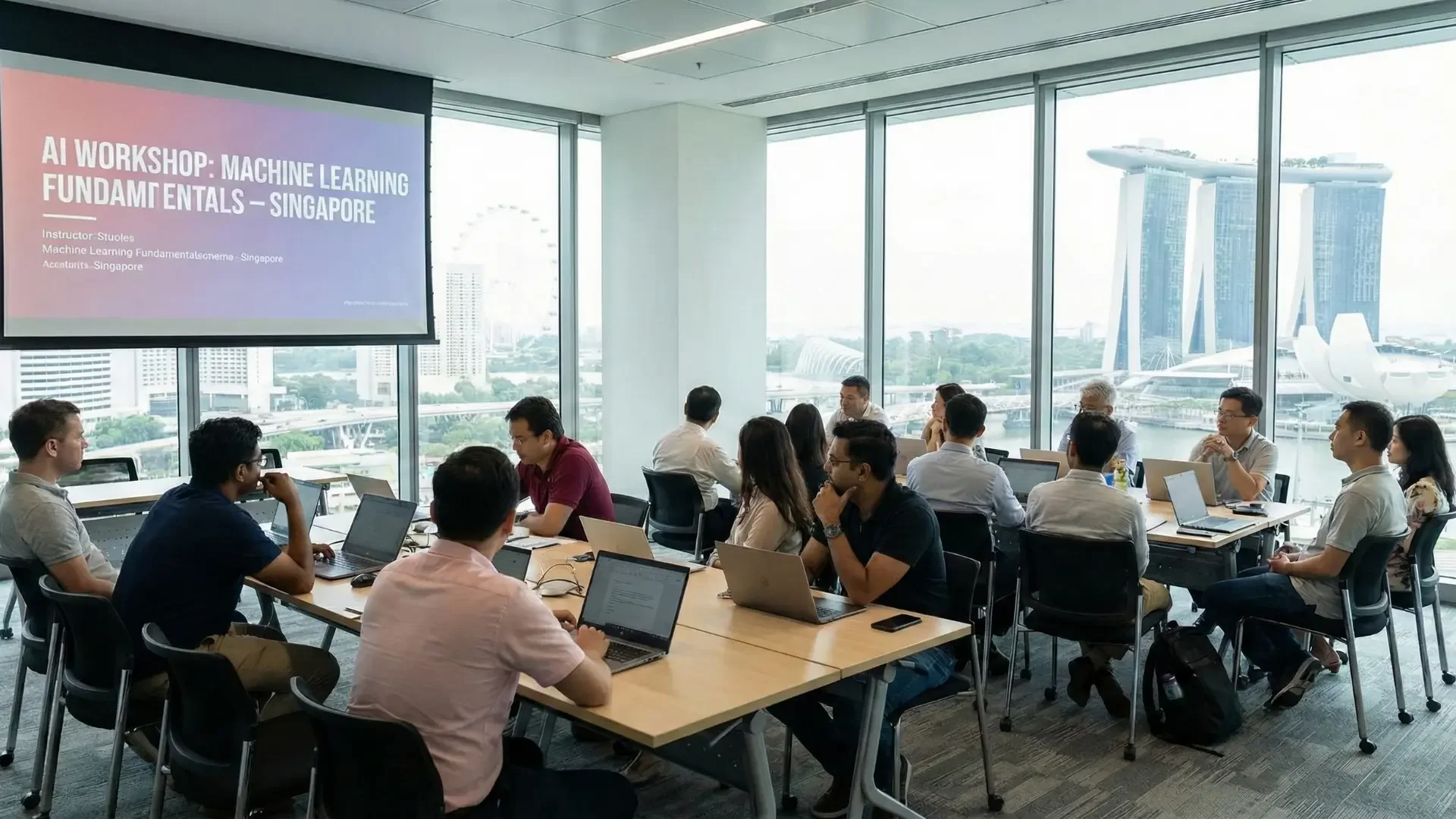
Executives take part in a hands-on AI and machine learning workshop in Singapore — the kind of immersive learning that separates observing innovation from understanding it.
For CEOs, this means moving beyond traditional benchmarking. The objective is not simply to understand what competitors are doing, but to expose leadership teams to new operating models, emerging technologies, and different ways of thinking about innovation. This is exactly the gap executive learning expeditions are designed to close – putting leadership teams inside the systems they're trying to understand, not just reading about them. In an era of accelerating disruption, the organisations that learn fastest will be the ones best positioned to create long-term competitive advantage.
"The only sustainable competitive advantage is an organization's ability to learn faster than the competition." — Peter Senge, author of The Fifth Discipline
The Strategic Takeaway
The lesson from Asia is not that Western companies should copy Asian models. It is that they should rethink the relationship between innovation and execution.
Shenzhen demonstrates how artificial intelligence can be deployed at industrial scale. Seoul shows how robotics and automation can transform productivity. Singapore proves how integrated digital infrastructure can accelerate innovation across an entire economy.
These examples point to a broader strategic shift: competitive advantage is increasingly determined not by who invents first, but by who can deploy, integrate, and scale innovation the fastest. As technologies mature and become more widely accessible, execution – not invention alone – is becoming the defining capability of high-performing organisations.

Generative AI is reshaping business operations — from decision-making to execution — faster than most organizations anticipated.
This shift carries enormous economic significance. According to the McKinsey Global Institute, generative AI alone could contribute between US$2.6 trillion and US$4.4 trillion in annual economic value across industries. Capturing that value, however, will depend less on access to the technology than on an organisation's ability to redesign processes, develop new capabilities, and execute transformation at scale.
Looking East to Understand the Future
The traditional narrative of global innovation is evolving.
Western economies continue to lead in fundamental research, entrepreneurship, and breakthrough technologies. Yet Asia has become a powerful demonstration of what happens when innovation is combined with speed, scale, and execution discipline.
China is showing how artificial intelligence can become operational infrastructure. South Korea is proving the transformative impact of robotics across advanced manufacturing. Singapore is demonstrating how digital ecosystems – built on trusted digital identity, interoperable public services, and forward-looking governance – can accelerate innovation across an entire society.
For today's CEOs, travelling to Asia is no longer simply about exploring new markets or identifying business opportunities. It is about observing, first-hand, how some of the world's most dynamic economies are redesigning the way organisations innovate, make decisions, and create value.
The next generation of competitive organisations will not necessarily be those with access to the most advanced technologies. They will be those that can learn faster, adapt faster, and execute faster. In that respect, Asia is no longer just a region to watch – it has become one of the world's most valuable leadership classrooms for understanding the future of business.
For today's business leaders, understanding these transformations can no longer be limited to reading reports or attending conferences. Observing firsthand how companies are already experimenting, scaling, and transforming their organizations provides a unique perspective on the challenges that Western economies and businesses will increasingly face.
At Learning Expedition, we design strategic immersions in China, South Korea, and Singapore, enabling CEOs, executive committees, and boards of directors to engage directly with the companies shaping the business models of tomorrow. More than a study tour, each Learning Expedition is designed as a strategic learning experience, where discussions with business leaders, industry experts, and innovation pioneers inspire concrete decisions that accelerate organizational transformation.
