
Asia’s Economic Map Is Being Redrawn. What Does It Mean for Western Companies?
By Nassera Tahanout
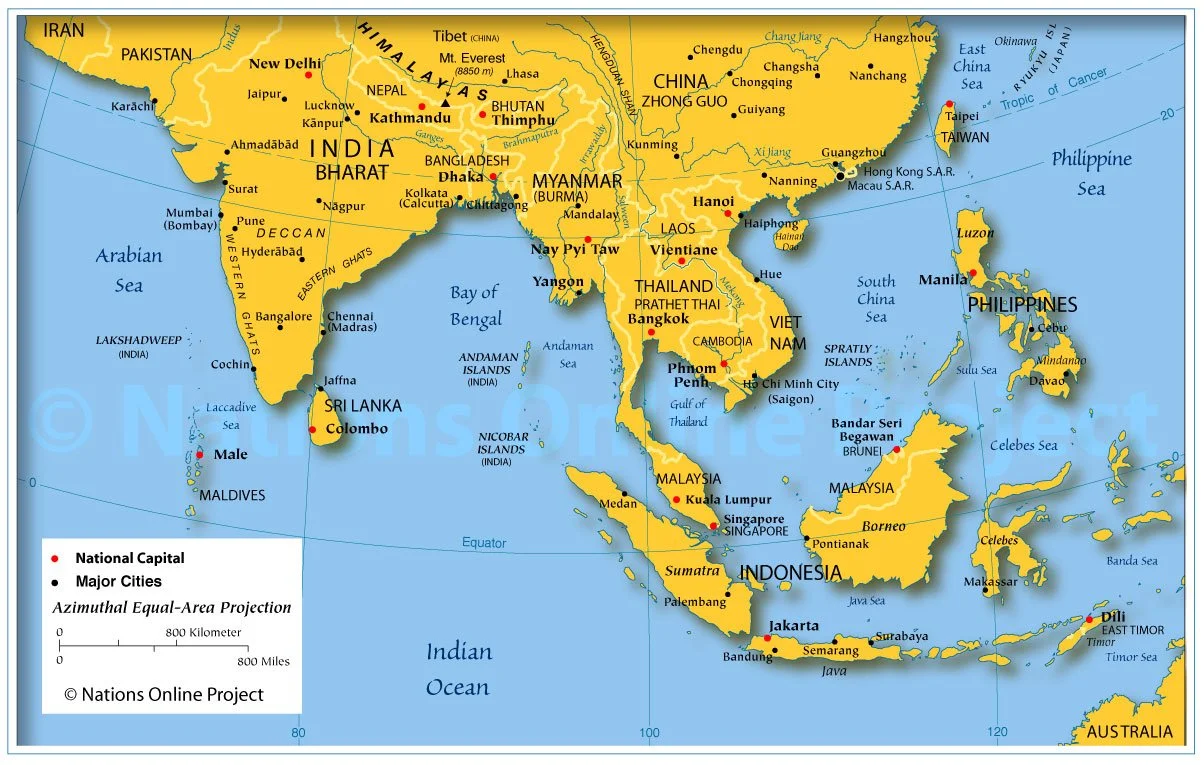
China, India, Vietnam, South Korea, Singapore, and Indonesia aren't six versions of the same opportunity — they're distinct pieces of a more connected Asian economic network.
Asia is undergoing a profound economic reconfiguration. Manufacturing is spreading across Southeast Asia. India is combining a vast domestic market with growing manufacturing ambitions. Vietnam is moving deeper into global supply chains. South Korea is strengthening its position in advanced industries while simultaneously exporting culture and consumer trends. Indonesia is attempting to move from exporting raw materials to processing them domestically. And Singapore is increasingly functioning as a regional command centre for companies operating across Southeast Asia. China, meanwhile, is not simply losing its role as the world's factory. It is becoming something more complex: an enormous consumer market, an advanced industrial ecosystem, a technology powerhouse and a critical node in global supply chains.
The result is not the decline of Asia's economic importance. It is the opposite. Asia is becoming more important and more difficult to understand. According to the Asian Development Bank, developing Asia and the Pacific are expected to grow by 4.9% in 2026. But the more significant story lies beneath that headline: growth is increasingly distributed across a network of economies with very different competitive advantages. For Western companies, the issue is no longer simply where to go in Asia. It is understanding what each ecosystem can offer, how those ecosystems connect, and where a company should position itself within that network.
China Is Changing Its Role Not Disappearing
China is perhaps the clearest example of why the old map of Asia no longer works. The narrative that China is simply becoming less attractive because companies are diversifying their supply chains is too simplistic. China remains an extraordinarily deep industrial ecosystem, with extensive supplier networks, infrastructure, engineering capabilities and domestic demand. But its economic trajectory is changing — and the latest data reveals an increasingly important divergence between industrial production and domestic consumption.
In July 2026, China’s industrial output grew 4.5% year-on-year, down from 5.3% in June and below the 4.8% growth economists had expected. At the same time, retail sales — a key indicator of domestic consumption — rose by only 0.6%, compared with 1% in June and well below the 1.5% forecast. Fixed-asset investment also fell 6.7% during the first seven months of the year.
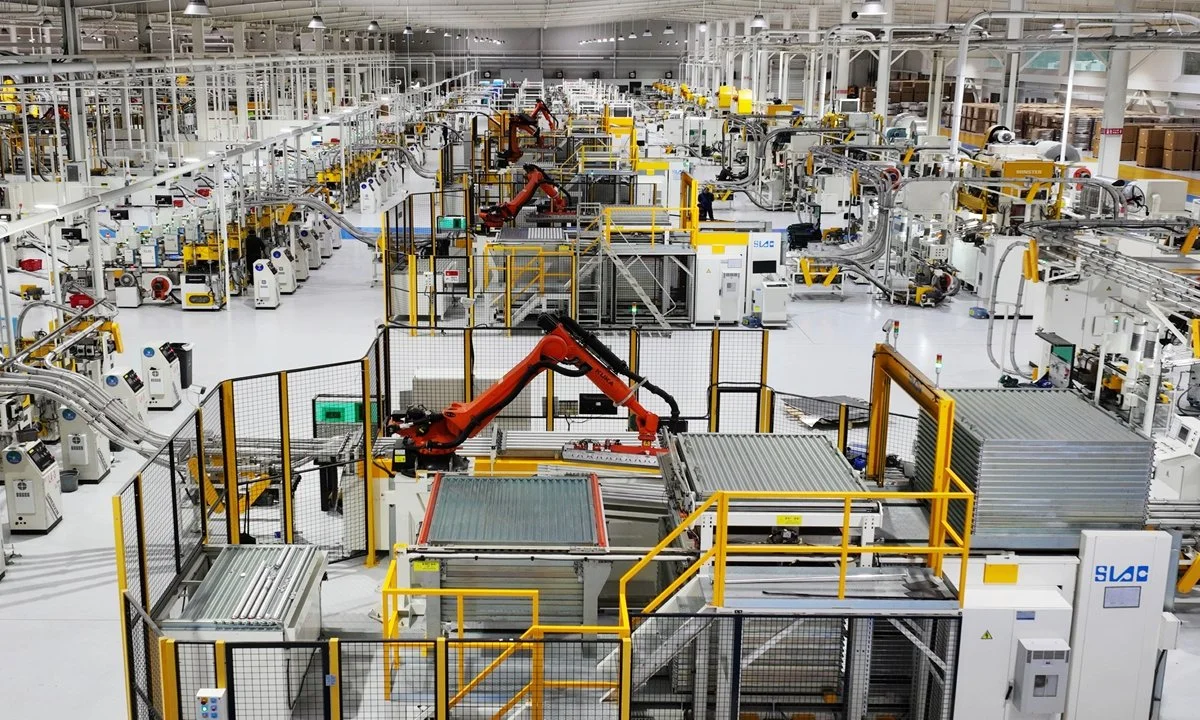
Even as domestic consumption slows, China's manufacturing output keeps climbing — new-energy vehicle production alone rose nearly 30% year-on-year in July 2026.
The picture becomes more nuanced when looking beneath the headline numbers. While overall industrial growth slowed, manufacturing output increased 5.5% in July, while high-value sectors continued to expand significantly. Production of new-energy vehicles rose 29.9% year-on-year, computer, communications and electronic equipment manufacturing increased 19.1%, and specialised equipment manufacturing grew 12.6%, according to China's National Bureau of Statistics.
At the same time, China's domestic consumption remains relatively subdued. Retail sales increased just 0.6% in July, although online retail sales of goods and services were up 4.8% during the first seven months of 2026, while cosmetics sales among major retailers increased 6.3%, according to China’s National Bureau of Statistics.
That combination tells a more interesting story than a simple slowdown. China's industrial machine remains highly active, even as domestic demand struggles to regain momentum. For Western companies, this matters because China can no longer be viewed through a single, one-dimensional lens.
A European manufacturer may want to diversify part of its production away from China while continuing to rely on Chinese suppliers and industrial expertise. A consumer brand may face a more cautious Chinese consumer, but still have to understand the world's second-largest economy and its increasingly sophisticated domestic competitors. A technology company may need to monitor Chinese innovation and manufacturing capabilities even if it has no immediate plans to operate in the market.
China's role is therefore not simply becoming smaller. It is becoming more complex. The strategic question for Western companies is: “Where does China fit within our global value chain, and what capabilities can we still learn from its ecosystem?” That is a much more sophisticated question — and an increasingly important one as the Asian economic map continues to change.
India Is Moving From Market to Economic Engine
If China's role in Asia is becoming more complex, India's is becoming broader. India is no longer simply the next great consumer market. It is simultaneously becoming a major services economy, a manufacturing destination, an infrastructure story and an increasingly important source of global companies. The scale of its growth remains striking. India’s economy expanded by 7.7% in the fiscal year ending March 2026, up from 7.1% the previous year, according to official data reported by Reuters. Private investment also grew by 10.8% in the final quarter of the fiscal year, while construction and agricultural output contributed to growth.
The outlook remains strong, although growth is expected to moderate. The World Bank projects India's economy to grow by 6.6% in FY2026/27, while still describing India as one of the world's fastest-growing major economies. The Bank highlights domestic demand and continued structural transformation as important foundations of the economy, while warning that higher energy prices and global uncertainty could weigh on growth.
What makes India particularly interesting, however, is not simply its GDP growth. It is the combination of scale, consumption and manufacturing ambition. Recent industrial data illustrates the shift. India's industrial production increased by 7.3% year-on-year in June 2026, its fastest pace in almost two years. Manufacturing output rose 7.8%, while capital goods production increased 14.2% — a useful indicator of investment in productive capacity. Over the April–June quarter, overall industrial production grew 5.8%, compared with 3.4% a year earlier.
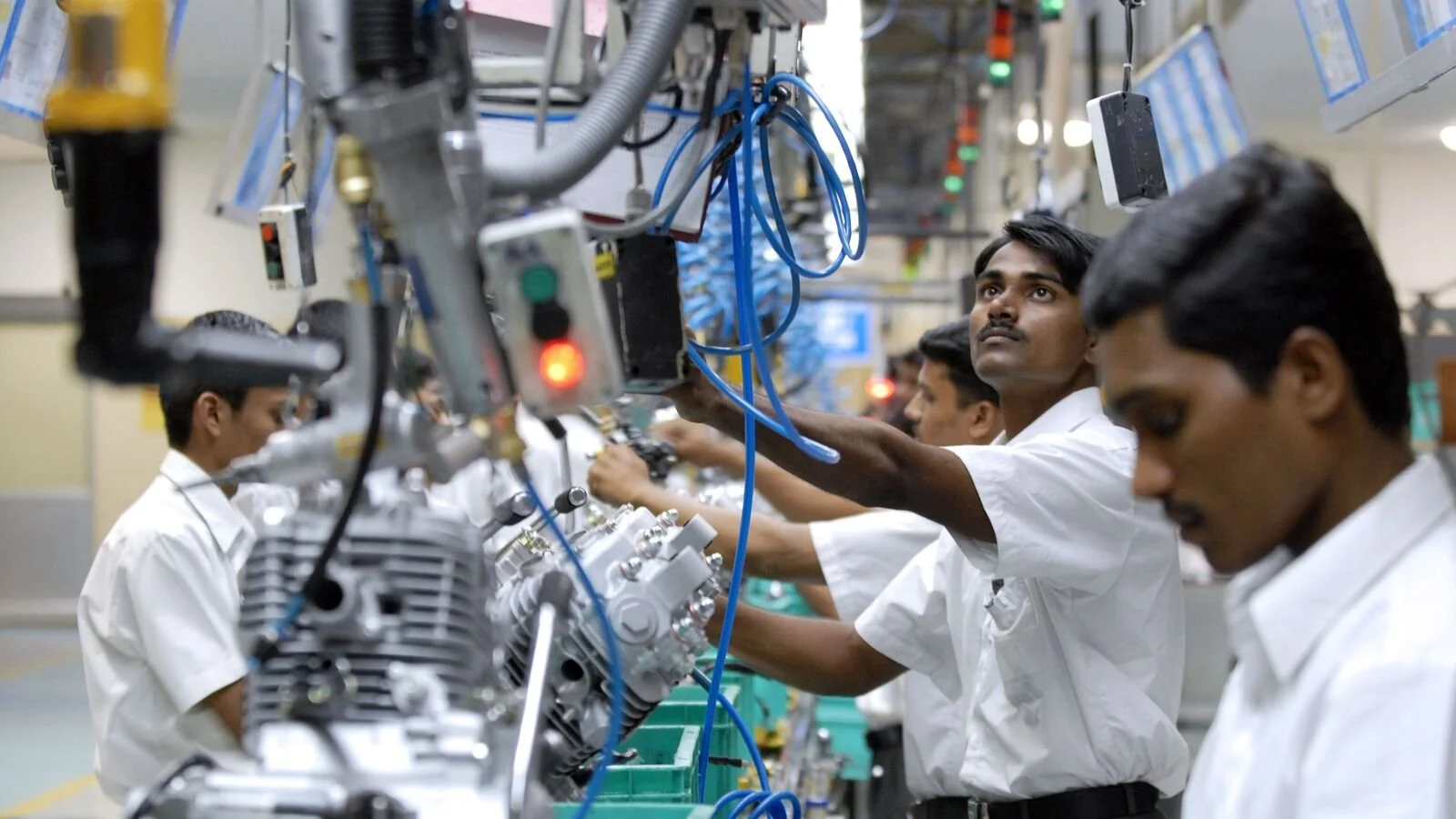
India's industrial production rose 7.3% year-on-year in June 2026, with manufacturing output up 7.8% — its fastest pace in nearly two years.
The government is also pushing to reduce India's dependence on imported industrial equipment. In August 2026, India moved toward approving a $1.2 billion incentive programme designed to encourage domestic production of high-value construction and infrastructure equipment and attract an estimated $1.8 billion in private investment. The programme targets products such as tunnel-boring machines, elevators and other technologically sophisticated equipment, many of which are currently imported. This is an important distinction. India is not simply trying to become another low-cost manufacturing destination. It is attempting to build domestic industrial capabilities around a huge and increasingly sophisticated market. That creates a different proposition for international companies.
A Western company entering India only as a sales market may miss a significant part of the opportunity. India is increasingly a place where businesses can sell, manufacture, hire, develop and scale — sometimes within the same ecosystem. The strategic question is therefore changing. It is no longer simply: “How do we enter the Indian market?” It is: “What role could India play in our global business?” For some companies, the answer may be access to one of the world's largest consumer markets. For others, it may be manufacturing, engineering, services, talent or partnerships with fast-growing Indian companies. And increasingly, it may be all of these at once. India is not simply becoming a larger market. It is becoming an increasingly important part of the architecture of the Asian economy.
Vietnam: More Than an Alternative to China
Vietnam is one of the clearest examples of how Asia's economic map is being redrawn. For years, multinational companies have increasingly looked to Vietnam as part of a broader strategy to diversify manufacturing beyond China. Electronics, textiles, footwear, machinery and consumer goods have all contributed to the country's growing role in global supply chains. But describing Vietnam simply as “the next China” misses the more interesting story.
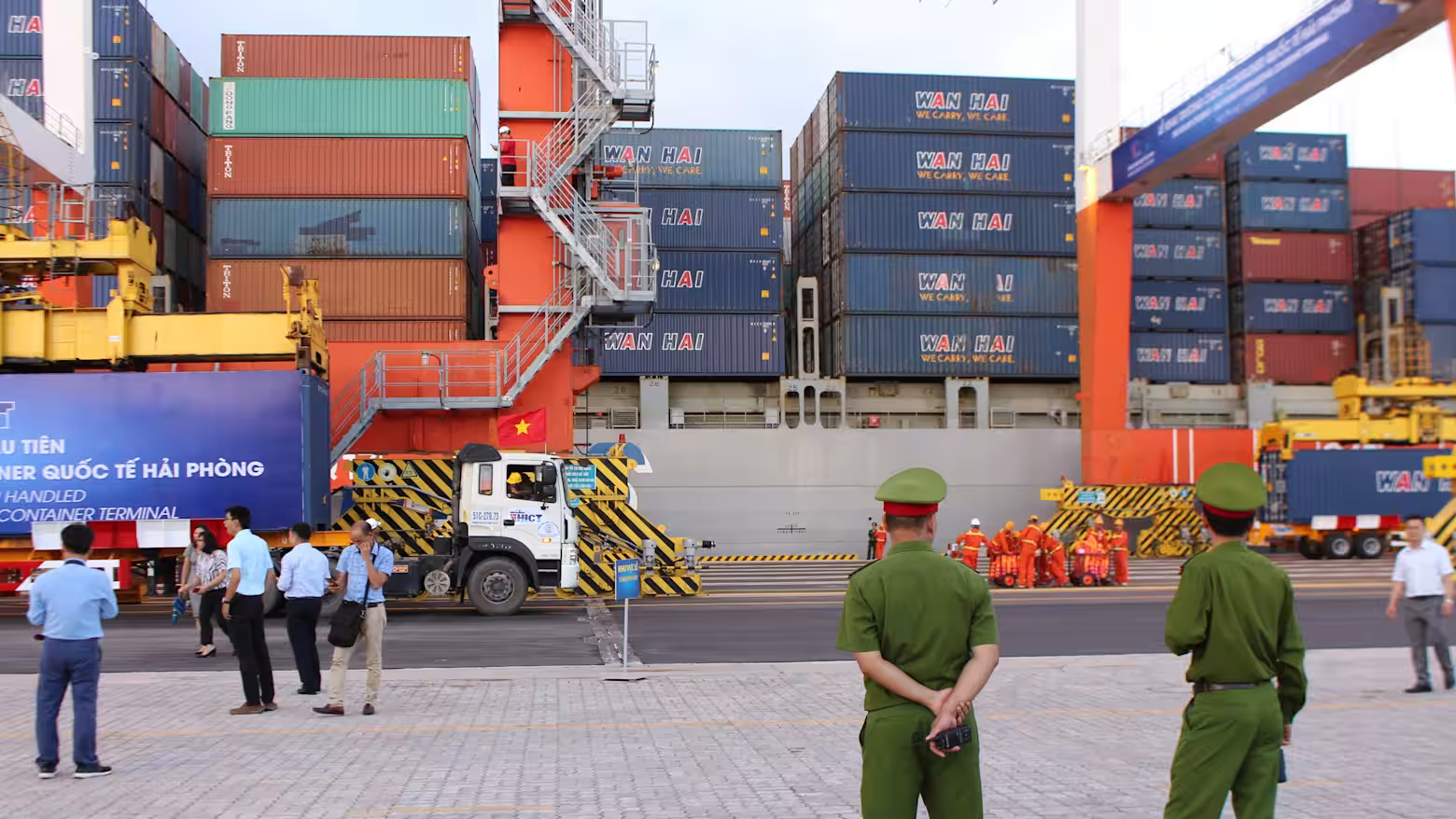
Lạch Huyện International Port in Hai Phong — part of the infrastructure behind Vietnam's 25% year-on-year export growth in July 2026.
Vietnam is not replacing China's industrial ecosystem. It is becoming increasingly connected to it — while simultaneously building a manufacturing base of its own. The latest figures illustrate just how quickly the economy is expanding. In July 2026, Vietnam's exports rose 25% year-on-year to around $53 billion, while imports increased by 41% to $56.7 billion. During the first seven months of the year, exports reached approximately $320 billion, up 21.7%, while imports rose 34.8%. Industrial production increased 14.5% in July, while foreign direct investment rose 11.8% year-on-year.
The World Bank expects Vietnam's economy to grow by around 6.8% in 2026, following an estimated 8% expansion in 2025. It identifies strong manufacturing exports, rising foreign investment and public investment as important drivers of the country's growth. Yet there is an important caveat. Vietnam's manufacturing success remains heavily dependent on foreign-invested companies. During the first seven months of 2026, the foreign-invested sector accounted for roughly 80% of the country's total exports, according to Vietnamese trade data. That tells us something important about the country's position in the new Asian economy. Vietnam has become an increasingly attractive production platform, but it is still working to deepen its domestic industrial ecosystem.
Many higher-value components and precision-manufactured parts continue to come from neighbouring economies, particularly China, South Korea and Taiwan. As a result, Vietnam's rise is not simply about companies moving factories from one country to another. It is about the gradual creation of a more distributed Asian manufacturing network. This distinction matters for Western companies.
A company looking at Vietnam solely as a lower-cost alternative to China may miss both the opportunity and the risk. The opportunity lies in Vietnam's rapidly expanding manufacturing base, strong export performance, growing infrastructure and ability to attract international investment. The risk lies in assuming that a factory in Vietnam automatically means a supply chain independent of China. In reality, the two ecosystems remain deeply connected. And that may be precisely what makes Vietnam strategically interesting.
Rather than asking whether Vietnam will replace China, companies should be asking a more useful question: “How can Vietnam become part of a more resilient and diversified Asian supply chain?” That could mean manufacturing in Vietnam while maintaining strategic suppliers in China, sourcing components from South Korea or Taiwan, coordinating regional operations from Singapore, and using Vietnam as a growing export platform. Vietnam therefore represents something bigger than a manufacturing alternative. It is one of the places where the new, more distributed Asian economic model is taking shape.
South Korea: An advanced economy that is expanding its global influence
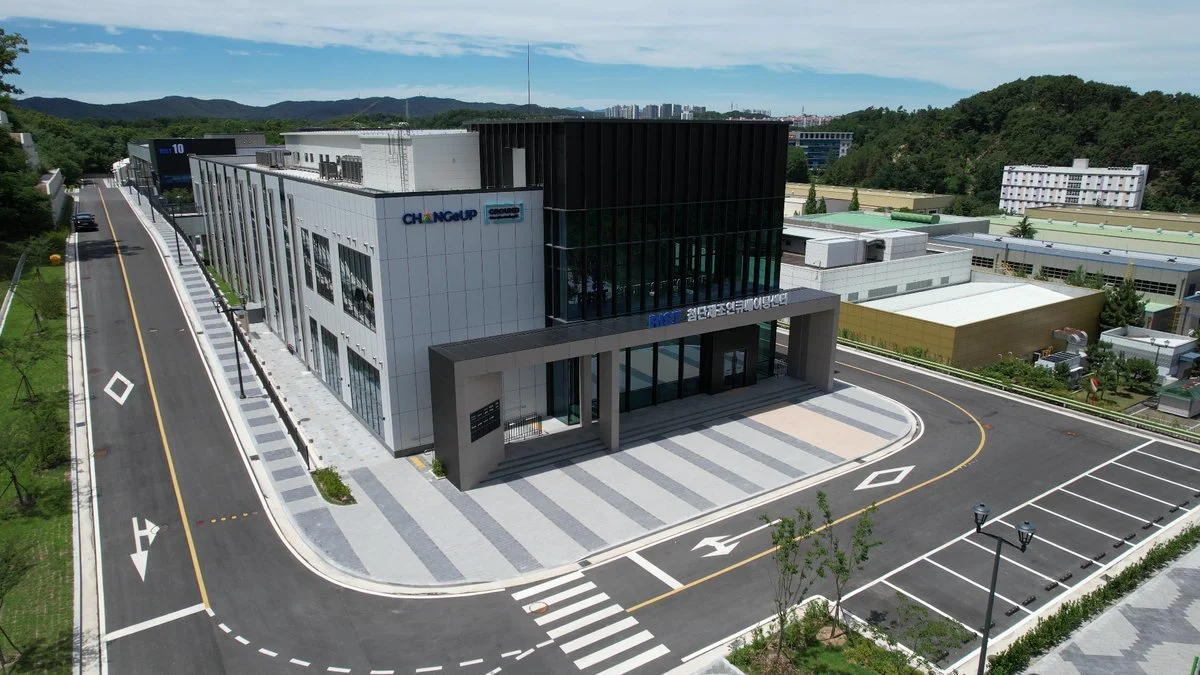
POSCO's manufacturing incubation center in Pohang — part of South Korea's push to turn industrial expertise into globally competitive technology and startups.
South Korea represents a very different stage of Asia's economic transformation. Unlike Vietnam or Indonesia, it is not primarily competing on labour costs or positioning itself as an alternative manufacturing base. South Korea is already a highly industrialised economy with globally competitive companies in semiconductors, electronics, automobiles, batteries, chemicals and advanced manufacturing. Its importance in the new Asian economic map lies elsewhere: South Korea is moving from being an export powerhouse to becoming an increasingly influential source of technology, industrial capabilities, consumer trends and culture.
The latest economic figures reinforce the strength of its export model. South Korea's exports surged by more than 60% year-on-year in July 2026, driven largely by semiconductor demand, while second-quarter GDP growth exceeded expectations. Semiconductor exports have become an increasingly important driver of the country's recovery. The Korea Development Institute subsequently raised its forecast for South Korea's 2026 economic growth from 2.5% to 3.2%, citing stronger-than-expected global demand for semiconductors and increased facility investment.
But looking only at semiconductors would again miss the bigger picture. South Korea has built an unusual combination of industrial strength and cultural influence. The same country that produces some of the world's most advanced memory chips also exports K-pop, Korean dramas, cosmetics, food, fashion and entertainment to global consumers. That creates opportunities that extend far beyond traditional Korean industries.
For Western companies, South Korea can therefore be viewed not only as a technology or manufacturing market, but as a place to understand how industrial capabilities, consumer culture and global branding can reinforce each other. This is particularly relevant in sectors such as beauty, fashion, entertainment, food, retail and consumer goods, where Korean companies have demonstrated an ability to identify trends domestically and scale them internationally. The strategic question for Western companies is therefore not simply: “What can we manufacture in South Korea?” It is: “What can we learn from the way South Korea turns industrial expertise, consumer insight and cultural influence into global competitiveness?”
South Korea's role in the Asian economy is no longer defined by exports alone. It is increasingly a source of ideas, products, technologies and trends that travel far beyond its borders.
Singapore: The Platform Connecting Asia's Markets
Singapore offers perhaps the clearest example of why the new Asian economic map cannot be understood simply by comparing national markets. It is a small country with limited domestic demand and no large manufacturing base comparable to China, India or Vietnam. Its competitive advantage is different. Singapore has positioned itself as a platform through which companies access, coordinate and invest across Asia. The city-state continues to attract companies because of its regulatory environment, connectivity, financial infrastructure, talent and proximity to the fast-growing economies of Southeast Asia.
The Singapore Economic Development Board notes that Singapore has become a major regional headquarters location for multinational companies, with firms using the city-state to coordinate activities across Asia and beyond. Its 2026 strategy continues to focus on strengthening Singapore's position as a regional hub for headquarters, innovation and high-value business activities.
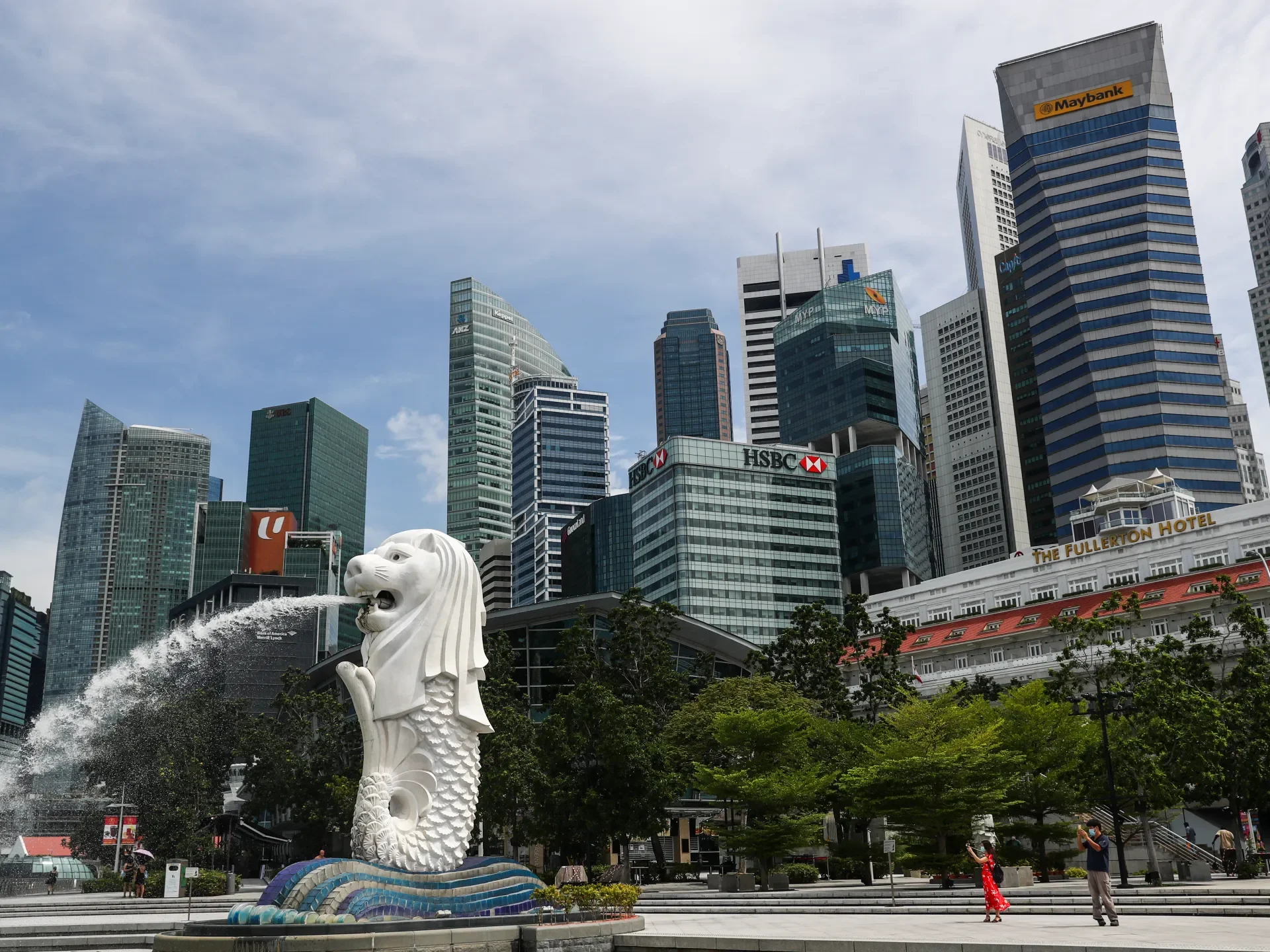
Singapore's skyline reflects its role as a regional financial center — home to S$3.13 trillion in corporate FDI and a growing base for multinational headquarters.
Singapore's investment position remains equally significant. The stock of foreign direct investment in Singapore's corporate sector reached S$3.13 trillion at the end of 2024, up 9.5% from the previous year, according to Singapore's Department of Statistics. The United States remained Singapore's largest source of FDI, while Japan, the United Kingdom and Hong Kong were also among its top ten sources.
These figures reinforce Singapore's role as more than a regional market. The city-state continues to attract and concentrate international capital, making it an important base from which multinational companies coordinate activities across Asia. But Singapore's role is now facing a new test.
The competition for capital and financial talent across Asia is intensifying, particularly with Hong Kong. In August 2026, Singapore announced new measures to strengthen its attractiveness to fund managers, including tax incentives, investment support and expanded access to specialised talent visas. Singapore's asset-management industry now manages almost S$7 trillion, having grown at an average annual rate of 7.5% over the past five years. That competition illustrates precisely what makes Singapore strategically interesting. Its value does not come from being the biggest economy in the region. It comes from being extremely good at connecting economies that are much bigger than itself.
A multinational might locate regional leadership, finance and R&D in Singapore while manufacturing in Vietnam or Indonesia, sourcing components from China and South Korea, and selling into Indonesia, India and other ASEAN markets. Singapore therefore represents a different kind of competitive advantage: “not scale, but connectivity”. For Western companies, the question is consequently not: “Is Singapore a large enough market for us?” It is: “Could Singapore help us operate more effectively across several Asian markets?” That is why its role in the new Asian economic map may be considerably larger than its physical size suggests.
Indonesia: Turning Natural Resources Into Industrial Power
Indonesia brings yet another dimension to Asia's economic transformation. With a population of more than 280 million and some of the world's largest reserves of key minerals, Indonesia has long been important as both a consumer market and a resource-rich economy. But the country is increasingly trying to change the way it captures value from those resources. The strategy is known as downstreaming: rather than exporting raw materials, Indonesia wants to process them domestically and develop industries around them.
Nickel is the most visible example. Indonesia holds an estimated 62 million metric tonnes of nickel reserves, representing around 44% of the world's total, according to a 2026 analysis from SOAS. The country has used restrictions on raw nickel exports to encourage investment in smelting and processing capacity. The results have been significant. Foreign investment has helped Indonesia rapidly expand its nickel-processing industry, turning the country into the world's leading producer of refined nickel and attracting major investments in stainless steel and electric-vehicle battery supply chains. The strategy is now extending beyond nickel. Indonesia's government has set an ambitious investment target of approximately Rp2,041 trillion, or around US$129 billion, for 2026, with downstreaming identified as one of the major drivers of future investment.
The country is also attracting substantial Chinese investment as it builds out its downstream industries. Chinese foreign direct investment in Indonesia reached approximately US$3.9 billion in the first half of 2026, according to Indonesia's investment authorities, making China one of the country's largest sources of foreign capital. Chinese companies such as EV battery giant CATL and steelmaker Tsingshan have become major players in Indonesia's nickel-processing ecosystem, with investments extending beyond raw-material extraction into smelting, battery production and other downstream activities. China and Indonesia are now also expanding cooperation in minerals, energy and technology.
But Indonesia's transformation comes with important challenges. The country's growing dependence on Chinese capital and expertise raises questions about how much value Indonesia will ultimately capture domestically. At the same time, Chinese companies operating in Indonesia have raised concerns about tighter regulations, higher taxes and changes to the country's nickel pricing framework. The relationship therefore illustrates both sides of Indonesia's industrial strategy: foreign investment can accelerate the development of domestic capabilities, but attracting capital is not the same as building an entirely independent industrial ecosystem.
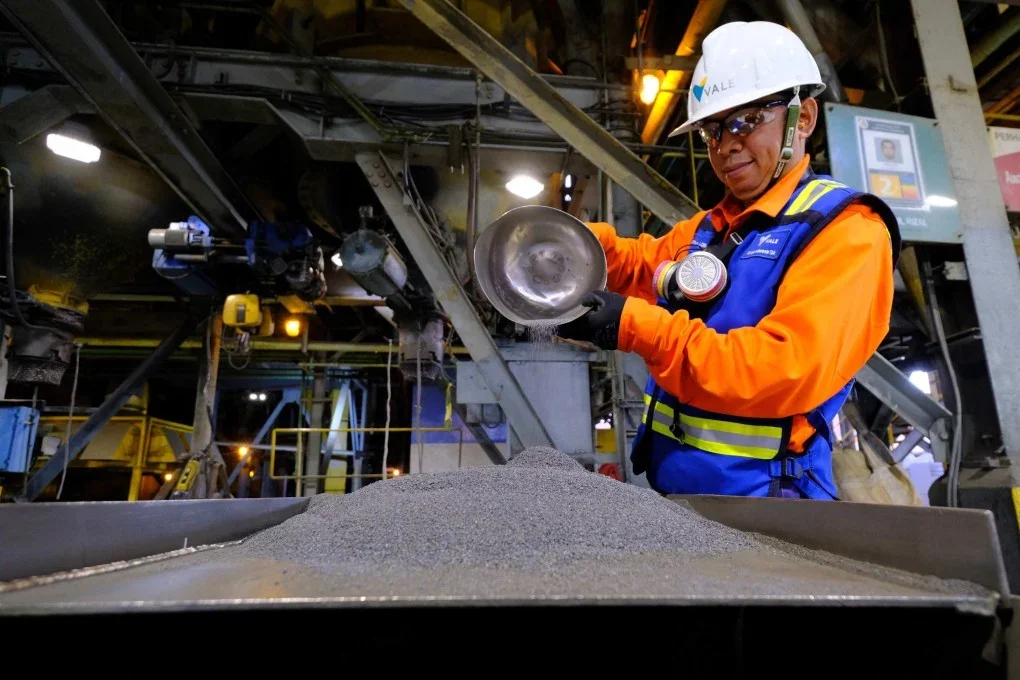
A worker at PT Vale Indonesia's nickel operations in Sulawesi — part of the downstreaming push behind Indonesia's 62 million tonnes of nickel reserves, roughly 44% of the world's total.
That makes Indonesia particularly interesting for Western companies. The opportunity is not simply to access Indonesia's resources or its consumer market. It is to understand how a large emerging economy is attempting to move up the value chain by using its natural-resource advantage as a foundation for industrial development. The strategic question is therefore no longer: “What resources can we source from Indonesia?” It is: “What industries could Indonesia build around those resources — and where could our company participate?” Indonesia's role in the new Asian economic map is consequently becoming much larger than that of a commodity exporter. It is attempting to turn resources into industrial capability.
The New Asian Economy Is Not a Collection of Markets, it is perhaps an Asian ecosystem strategy
This is the fundamental change Western executives need to understand. China, India, Vietnam, South Korea, Singapore and Indonesia are not six versions of the same opportunity. They perform different functions that western companies need a different way of looking at Asia.
The strategic opportunity lies in understanding the connections between them. Consider a company that manufactures components in China, adds production capacity in Vietnam, operates a regional headquarters in Singapore, sources materials from Indonesia, sells into India and partners with a Korean technology company. That is no longer a country strategy. And companies that continue to analyse Asia country by country risk missing precisely where the opportunities are emerging.
The transformation of Asia raises a bigger question for Western companies: What if the greatest opportunity is not simply to sell into Asia, manufacture in Asia or invest in Asia — but to learn from how Asian companies operate?
The six markets examined in this article illustrate why a traditional country-by-country approach is becoming increasingly inadequate: China demonstrates the resilience and depth of a massive industrial ecosystem, even as domestic demand slows. India is combining consumer scale with manufacturing, infrastructure and services. Vietnam is becoming an important manufacturing platform while remaining deeply connected to China's supply chains. South Korea is turning industrial expertise and consumer culture into global products, technologies and brands. Singapore is using connectivity, capital and institutional infrastructure to position itself as a platform for the region. And Indonesia is attempting to transform its natural-resource advantage into higher-value industrial capabilities. These are very different models. But they share one characteristic: They are built around adaptation.
This is where the perspective of Anthony Tan, co-founder and CEO of Singapore-based Grab, becomes particularly relevant:
Reflecting on what businesses in the United States can learn from Southeast Asia, Tan argues that “operating in markets with lower margins and more challenging conditions can build resilience and drive innovation”. He also emphasises humility: “Leaders need to recognise that they are not always the smartest people in the room and actively seek feedback from employees and partners”. Grab's own experience illustrates the point. The company did not build its business by simply importing a Silicon Valley model into Southeast Asia. It developed by solving highly local problems — from fragmented transportation systems to different consumer behaviours and infrastructure constraints — and by continuously adapting its products to conditions on the ground.

Grab co-founder and CEO Anthony Tan, whose reflections on resilience and adaptation in Southeast Asia close out this piece: "Leaders need to recognise that they are not always the smartest people in the room."
Tan has described this approach more explicitly elsewhere: Grab's products are developed by getting close to the people it serves, including users and partners in markets outside major cities. The company's teams use these observations to identify problems and adapt their products accordingly. This is a crucial lesson for Western companies.
Asia should not only be viewed as a collection of markets to enter. It can also be viewed as a collection of environments in which to test assumptions. A product that works in Paris, London or New York may not work in Jakarta. A supply-chain strategy designed around China may need to be reconsidered once Vietnam, India or Indonesia enter the equation. A consumer proposition developed for a mature Western market may need to be fundamentally redesigned for a younger, more mobile-first Asian consumer. And a business model that looks expensive or inefficient from a Western perspective may reveal new ways of operating when confronted with different infrastructure, price points and competitive pressures. The result can be more than local adaptation. It can create innovation that travels in the opposite direction.
A company may enter Asia to serve local customers, discover a more efficient business model there, and eventually bring that model back to Europe or North America. This is already happening across sectors: payments, mobility, retail, beauty, entertainment, manufacturing and financial services increasingly generate ideas in Asia that are later adopted or adapted elsewhere. That changes the strategic role of an Asian expansion. The objective should not simply be: “How can we make our existing business work in Asia?” It should also be: “What could our business become if Asia challenged the assumptions on which it was built?” That is a very different approach to internationalisation.
It requires companies to spend time on the ground, meet local entrepreneurs and operators, observe consumers, understand ecosystems and compare how different markets solve similar problems. And it requires something that is often underestimated in international expansion: curiosity. Because the new Asian economic map is not simply creating more markets for Western companies to enter. It is creating more places from which Western companies can learn.
Learn From Asia, On the Ground
The Asian economic map is being redrawn in real time. For Western companies, understanding that transformation will require more than reports and forecasts. It requires direct exposure to the companies, ecosystems, entrepreneurs and consumers shaping what comes next.
At Learning Expedition we help executives and leadership teams explore Asia's most dynamic business ecosystems through curated company visits, expert conversations and immersive learning experiences.
Whether you want to explore China, South Korea, Singapore or the wider Asian business landscape, our Learning Expeditions are designed to help your team move from observation to insight — and from insight to action.
Growth across Asia is no longer concentrated in one place — it's distributed across a network of economies, each moving at its own pace and in its own direction.
Asia is changing. The question is not whether your company should pay attention. It is whether you will learn fast enough to turn that change into an advantage
