
Beyond diplomacy, explore the digital, financial and human developments reshaping Cambodia — and the opportunities they reveal for companies looking towards Southeast Asia.
By Nassera Tahanout

Phnom Penh's changing skyline reflects Cambodia's growing economic ambitions.
Understanding Asia Means Being Where Change Happens
When Cambodia hosted the 20th Francophonie Summit in Phnom Penh on 15–16 November 2026, international attention turned towards a country whose economic ambitions extend well beyond its traditional position as a manufacturing destination.
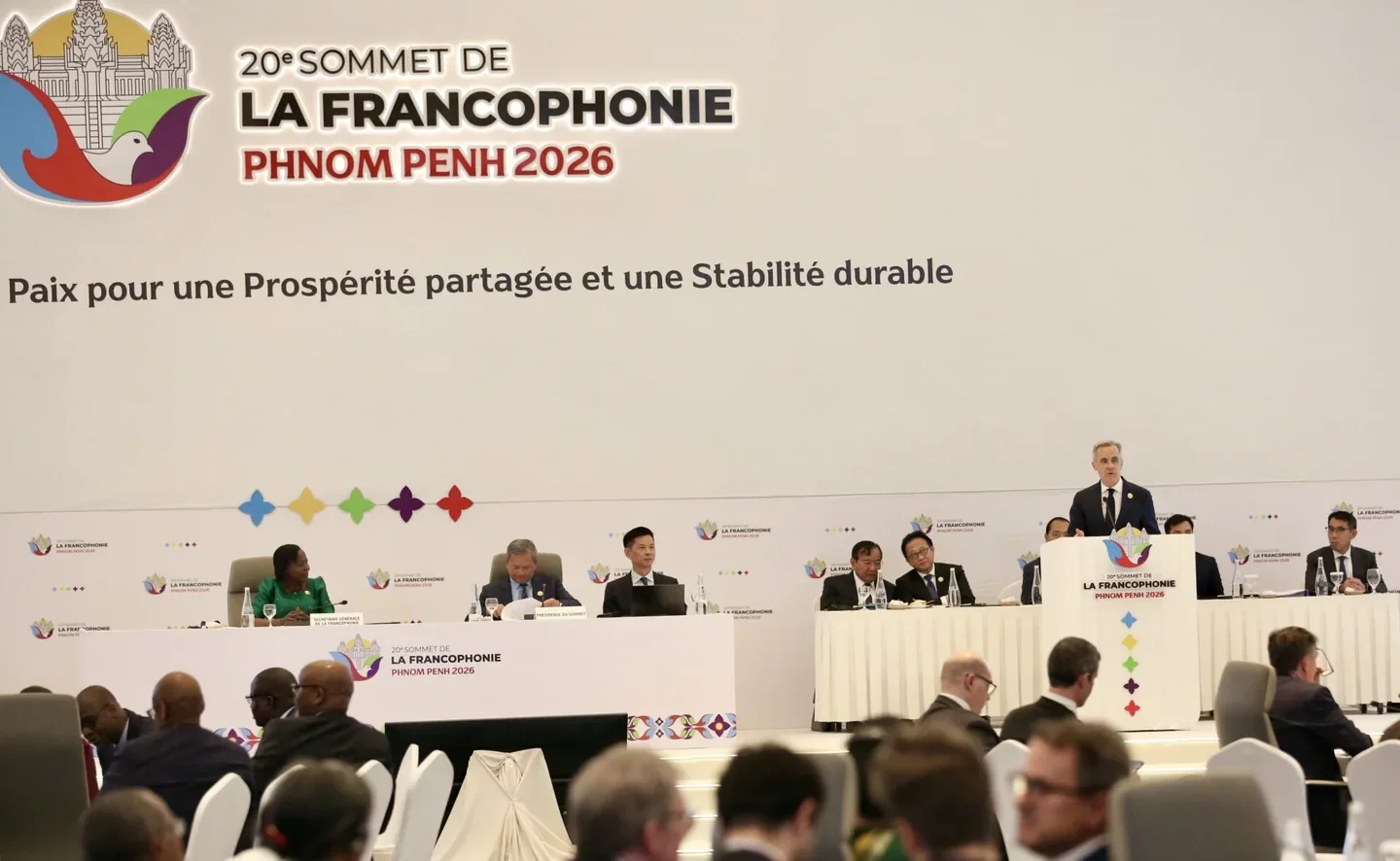
Cambodian Prime Minister Hun Manet, OIF Secretary-General Louise Mushikiwabo and Canadian Prime Minister Mark Carney at the 20th Francophonie Summit in Phnom Penh, 16 November 2026.
Under the theme “Reinvesting in Peace for Shared Prosperity and Lasting Stability,” the summit brought together political leaders and representatives from across the Francophone world. Alongside the diplomatic programme, events such as FrancoTech and the Francophone Entrepreneurs Meeting created opportunities to discuss innovation, technology and economic cooperation.
Yet the significance of this moment goes beyond the summit itself. Cambodia is navigating a broader transformation involving industrial diversification, digital infrastructure, financial innovation and human capital development. These changes are taking place within a Southeast Asian region where supply chains, technology ecosystems and regional economic integration are evolving rapidly.
For international business leaders, the central question is therefore not simply whether Cambodia is an attractive market. It is how the country's transformation fits into the wider Asian economic landscape — and where companies can identify meaningful opportunities.
Understanding these developments requires more than following announcements. It requires an informed view of local markets, regional dynamics and the people shaping change on the ground.
1. Cambodia’s Economic Transformation: Moving Beyond Traditional Manufacturing
Cambodia's economy has long benefited from export-oriented manufacturing, particularly garments, footwear and travel goods. These industries remain important, but the country's development strategy increasingly seeks to attract higher-value activities and diversify its industrial base.
The latest figures underline both the country's resilience and the challenges ahead. According to the International Monetary Fund's 2026 Article IV Consultation for Cambodia, economic growth reached 5.3% in 2025, supported by manufacturing exports, foreign direct investment and infrastructure projects.
However, the IMF projects growth to slow to 3.0% in 2026 before recovering to 4.0% in 2027. Weaker domestic demand, subdued real estate activity, financial vulnerabilities and external pressures are weighing on the outlook. These projections are a reminder that Cambodia's transformation is taking place in a complex economic environment, not in a period of uninterrupted expansion.
For investors, the distinction matters. Cambodia's potential should be assessed not only through growth forecasts, but through the quality of its industrial ecosystem, infrastructure, workforce and investment conditions.
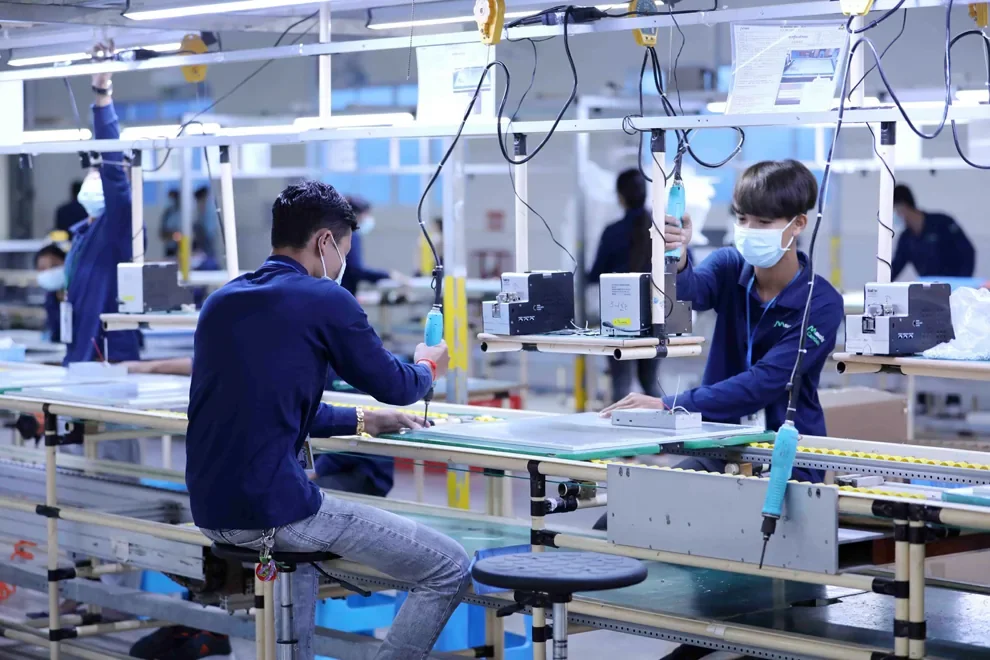
Workers at Meko Intelligent (Cambodia) Co Ltd's US$32 million light bulb, electronics and electronic parts factory in Takeo province.
Special Economic Zones: Building Industrial Ecosystems
One of the country's most visible instruments for attracting investment is its network of Special Economic Zones (SEZs). These zones provide companies with access to industrial land, infrastructure, logistics connections and administrative services, while supporting export-oriented production.
The Council for the Development of Cambodia (CDC) describes SEZs as strategic locations designed to facilitate investment and industrial activity. Its Special Economic Zones overview and map identifies 26 operating zones and 745 investment projects as of the first half of 2024, representing reported investment capital of US$8.9 billion and more than 180,000 employees. These figures are historical reference points rather than current 2026 totals, but they illustrate the role SEZs have played in Cambodia's industrial development.
The next stage is not simply to attract more factories. It is to deepen local supplier networks, improve skills, increase technology transfer and move towards more sophisticated production.
Cambodia's investment framework reflects this ambition. The CDC's investment incentives and schemes identify 19 eligible sectors and activities, including high-tech industries, research and development, electronics, machinery, agro-processing, logistics, digital industries and activities linked to regional and global production chains.
For international companies, this creates opportunities to explore manufacturing partnerships, component sourcing, industrial services and supply-chain diversification. But the value of an investment will depend on understanding the capabilities and limitations of each location, rather than assuming that all zones offer the same advantages.
Infrastructure and Connectivity: A Strategic Advantage in Development
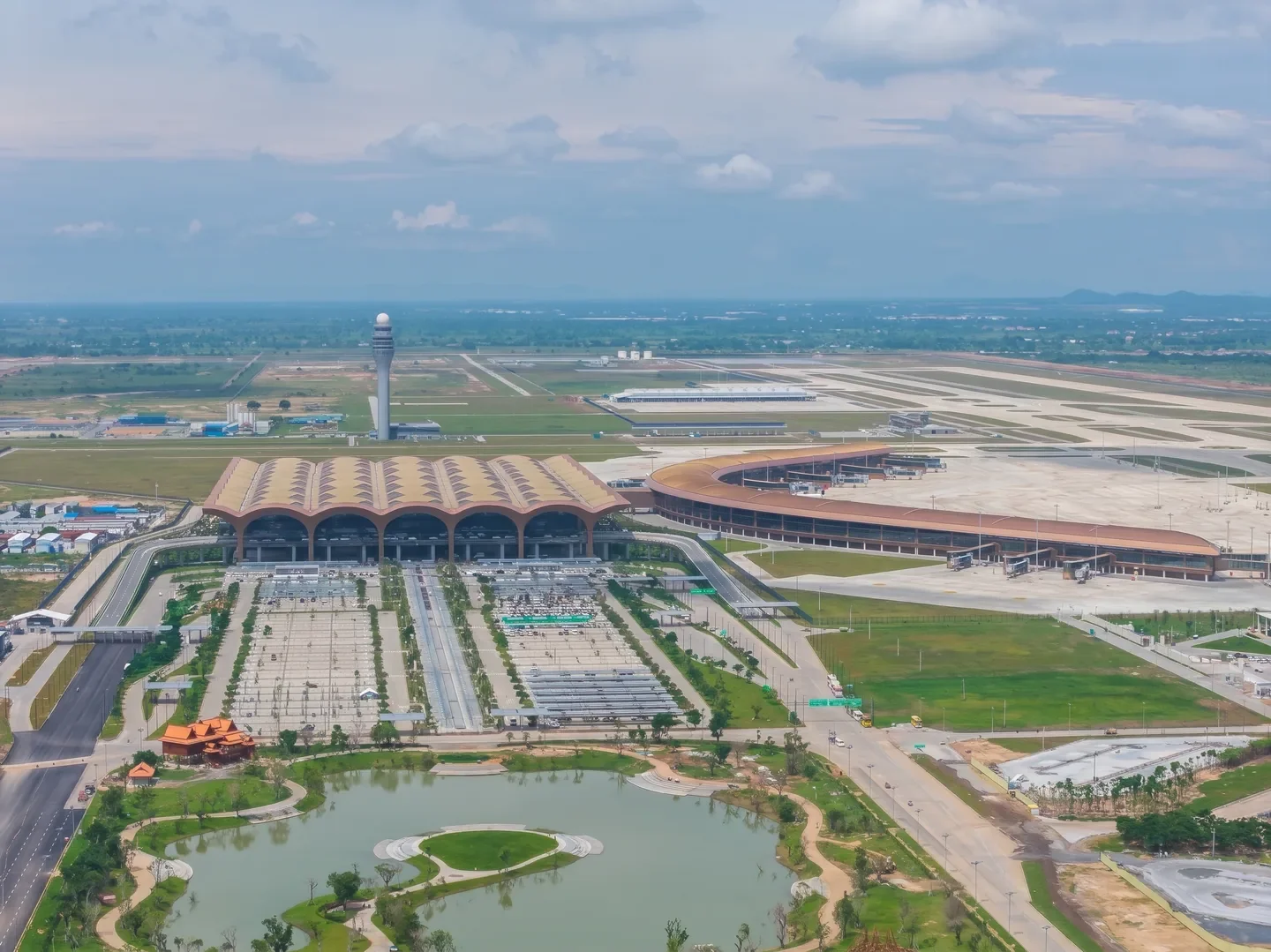
Techo International Airport, which opened on 9 September 2025, strengthens Cambodia's international connectivity.
Infrastructure is another important component of Cambodia's economic transition. The opening of Techo International Airport on 9 September 2025 marked a major milestone in the country's international connectivity. Its first commercial flights represented the beginning of operations at a major new aviation hub serving Phnom Penh and the wider Cambodian economy. The airport forms part of a broader effort to strengthen Cambodia's capacity to welcome international visitors, facilitate business travel and support trade and investment.
For companies, improved connectivity can influence decisions about regional operations, logistics, tourism and business development. However, infrastructure alone does not create a competitive ecosystem. Its impact depends on how effectively it connects with industrial zones, transport networks, services and the needs of businesses operating in the country.
2. Digital Finance and Innovation: A Transformation Already Underway
Cambodia's digital transformation is not limited to government strategies or technology ambitions. It is increasingly visible in the way consumers and businesses make payments, access services and interact with financial institutions.
The government's Digital Economy and Society Policy Framework 2021–2035 sets out a long-term vision built around five priorities: digital infrastructure, digital citizens, digital government, digital businesses, and trust in digital systems.
The framework matters because it recognises that digital development requires more than technology adoption. It also depends on skills, institutions, regulation, connectivity and confidence among users.
Bakong: The Expansion of Digital Payments
One of the clearest examples of Cambodia's digital progress is Bakong, the payment system developed under the National Bank of Cambodia. Its expansion has been significant. According to figures from the National Bank of Cambodia's 2025 Financial Stability Review, reported by Cambodia Investment Review and detailed by Riel Street's analysis of Bakong, the system processed approximately 1.326 billion transactions in 2025, an increase of 118.7% compared with 2024. Their total value reached KHR 899.1 trillion, up 52.2%.
Cross-border payment activity also expanded. Bakong processed approximately 270,600 cross-border transactions in 2025, representing an increase of 74.5%, with a total value of KHR 111.4 billion. The system's regional connections are particularly relevant. By the end of 2025, payment links covered eight regional economies, including Laos, Thailand, Vietnam, Malaysia, South Korea, China, Japan and Singapore.

Using the KHQR app to scan a JPQR code for payment in Japan, one of Bakong's cross-border payment links.
These developments illustrate how digital payment infrastructure can support financial inclusion, facilitate everyday transactions and strengthen cross-border economic connections. For international companies, the implications extend beyond fintech. Digital payment adoption can influence retail, tourism, hospitality, e-commerce and the delivery of financial services. It also provides an indication of how quickly consumer behaviour and business practices can evolve in a market.
AI and the Digital Economy: From Policy to Practical Adoption
Artificial intelligence is also becoming part of the regional conversation about competitiveness, productivity and economic development. The Phnom Penh Declaration adopted at the Francophonie Summit highlights the importance of human-centred, responsible and inclusive artificial intelligence, alongside digital governance and skills development.

Young entrepreneurs and developers are driving Cambodia's digital economy.
The summit's parallel programme provided a more practical business dimension. FrancoTech, held from 14 to 16 November 2026, brought together technology companies, innovators and institutions around digital innovation. Its programme included AI, FinTech, AgriTech, EdTech and other areas of technology-driven development. The event was announced with more than 200 exhibitors and 5,000 visitors expected; these were programme expectations, not confirmed attendance figures.
The official Francophone Entrepreneurs Meeting programme also sought to strengthen economic connections between Francophone communities and ASEAN economies. For businesses, the opportunity is not necessarily to replicate technology models developed in larger Asian markets. It is to understand where digital tools can address local needs, improve operational efficiency and support the development of new services.
3. Human Capital: The Foundation of Long-Term Competitiveness
Cambodia's economic transformation also depends on its ability to develop a workforce capable of supporting more sophisticated industries. Education, vocational training and access to relevant skills will be essential if the country is to move beyond labour-intensive manufacturing and attract higher-value investment.
The World Bank's research on Cambodia's transition from foundational learning to STEM and research highlights both progress and persistent challenges. More than 600,000 students have benefited from improved schools through supported programmes. In higher education, 6,809 graduates from participating universities achieved an employment rate above 93%, compared with 72% at non-participating universities.

Building technical and STEM skills is key to Cambodia's long-term competitiveness.
At the same time, the report points to structural gaps. Only 20% of higher education students are enrolled in STEM disciplines, while weaknesses in foundational learning and limited links between universities, research and industry continue to affect workforce readiness. For international businesses, these figures highlight an important consideration: access to talent cannot be assessed solely through labour availability or wage levels.
Companies considering Cambodia for manufacturing, technology, business services or regional operations need to understand the skills available locally, the capacity of education institutions and the potential for partnerships with universities and training providers. Human capital is not simply a social development issue. It is a strategic factor in productivity, innovation and long-term investment performance.
4. Where International Companies Can Find Opportunities
Cambodia's transformation creates opportunities across several sectors. However, identifying them requires a realistic understanding of market maturity, local capabilities and regional competition.
Manufacturing and supply-chain diversification
Cambodia's SEZ network and investment incentives offer opportunities for companies seeking to diversify production and develop additional supply-chain capacity in Southeast Asia. Electronics, automotive components, machinery, agro-processing and higher-value manufacturing are among the areas identified in the country's investment framework.
The strategic question is not whether Cambodia can replace established manufacturing centres. It is where the country can complement existing production networks and offer a competitive role within a broader regional strategy.
Digital finance and business services
The expansion of Bakong and digital payment infrastructure creates opportunities for fintech providers, payment-related services, cybersecurity, software development and digital solutions for businesses.
Companies should examine the regulatory environment, partnerships with local financial institutions and the specific needs of consumers and merchants before entering the market.
Agriculture and food processing
Agriculture remains an important part of Cambodia's economy. Investment in agro-processing, storage, logistics, quality control and agricultural technology could help improve productivity and increase the value of locally produced goods.
These opportunities are particularly relevant for companies with expertise in food processing, supply-chain management, traceability and technology-enabled agriculture.
Education and workforce development
The need to strengthen technical and digital skills creates opportunities for vocational training providers, educational technology companies, universities and corporate learning organisations. Partnerships between businesses and education institutions can help bridge the gap between academic training and practical industry requirements.
Across these sectors, the most promising opportunities are not necessarily the most visible ones. They often emerge through relationships with local companies, institutions, investors and decision-makers who understand the market from within.
5. Cambodia in the Wider Southeast Asian Landscape
Cambodia's transformation cannot be understood in isolation. It is taking place within one of the world's most dynamic economic regions, where countries are developing complementary strengths while competing for investment, talent and strategic relevance.
Singapore has established itself as a regional centre for finance, advanced services, technology and corporate coordination. Vietnam has become a major manufacturing and export platform, supported by its integration into global supply chains. Thailand retains important industrial capabilities in automotive production, electronics, tourism and logistics.
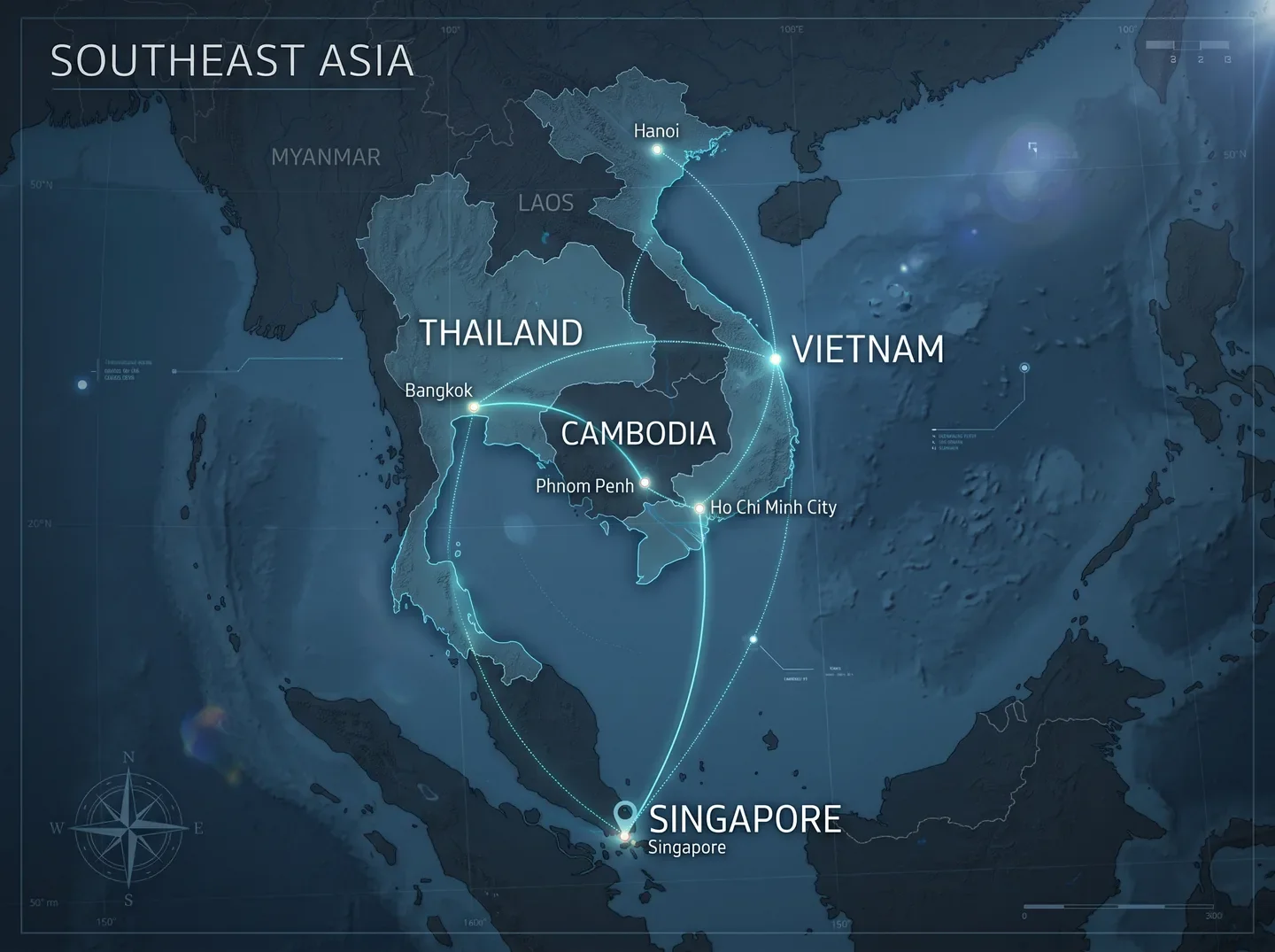
Cambodia within Southeast Asia's connected regional economy.
Cambodia occupies a different position. Its industrial base is less mature, but its investment framework, geographical location and development priorities create opportunities for companies seeking to build a more diversified regional presence. The strategic value of Cambodia may therefore lie not in replacing another Southeast Asian market, but in complementing existing operations and partnerships.
Regional digital integration is another important development. On 1 June 2026, ASEAN announced the conclusion of negotiations on the ASEAN Digital Economy Framework Agreement (DEFA), the region's first comprehensive agreement of this kind. ASEAN estimates that the digital economy could reach US$2 trillion by 2030 if the agreement is successfully implemented. The framework is intended to support a more integrated digital economy through areas such as digital trade, payments, data, cybersecurity and emerging technologies.
The agreement's implementation and signature process remain important next steps. Nevertheless, the conclusion of negotiations signals the direction of regional cooperation and the growing importance of cross-border digital business. For international companies, this means that market-entry decisions should increasingly be considered at a regional level. A presence in Cambodia may be part of a wider strategy involving suppliers in Vietnam, financial and operational coordination in Singapore, or technology partnerships in South Korea and other Asian markets. Understanding these connections is essential to identifying where each country can contribute to a company's wider objectives.
6. Learning Expedition: Connecting Business Leaders with the Realities of Asia
Asia's economic landscape is changing constantly. New technologies, industrial strategies, consumer behaviours and regional partnerships are reshaping markets at a pace that can be difficult to understand from a distance. For international executives, access to information is no longer enough. The challenge is interpreting what those developments mean for their business, identifying the right people to engage with and understanding how local ecosystems operate in practice.
This is where Learning Expedition brings value. As an Asia-focused specialist, Learning Expedition combines market exploration, strategic business connections and learning through direct engagement with local ecosystems. Its role is not simply to introduce companies to new markets, but to help decision-makers understand the forces shaping them.
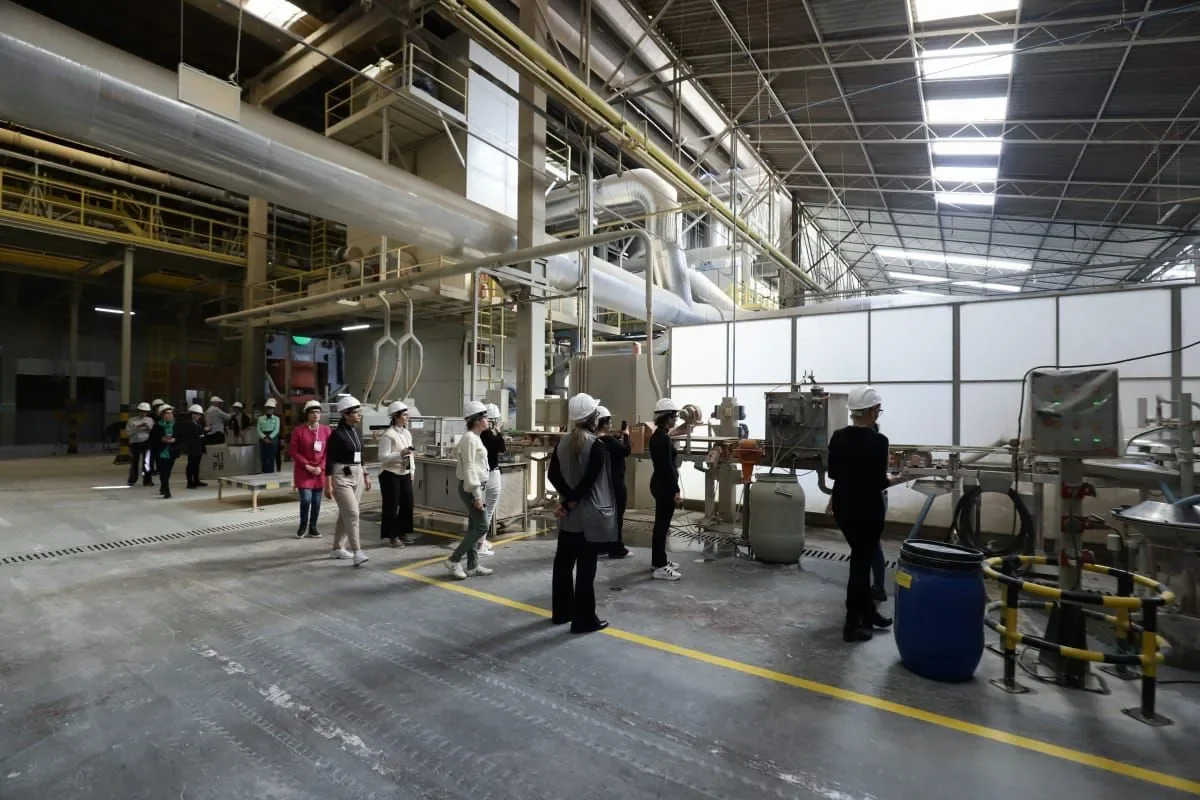
A Learning Expedition delegation engaging directly with industry on the ground.
Through its regional knowledge and relationships with local stakeholders, Learning Expedition helps international businesses move beyond general market information and engage with the companies, institutions, innovators and decision-makers driving change. Whether the objective is to explore a new market, understand an emerging technology, identify potential partners or benchmark business practices, first-hand exposure can provide perspectives that conventional research alone may not deliver.
Cambodia is one example of why this approach matters. Its transformation cannot be understood solely through investment statistics, policy announcements or economic forecasts. It requires an appreciation of how industrial development, digital adoption, human capital and regional integration interact on the ground.
The same principle applies across Southeast Asia. Each market has its own strengths, constraints and pace of change. Understanding the region means recognising these differences while identifying the connections that create opportunities for international business.
Conclusion: Understanding Asia Means Being Where Change Happens

Understanding Asia means being where change happens.
The 20th Francophonie Summit placed Cambodia in the international spotlight, but the country's economic transformation extends far beyond a diplomatic event. Industrial diversification, digital finance, infrastructure development and investment in human capital are reshaping the country's economic foundations. At the same time, regional integration and the evolution of Southeast Asia's digital economy are creating new opportunities and strategic considerations for international companies.
Cambodia is not without challenges. Its economic outlook remains exposed to external pressures, financial vulnerabilities and structural skills gaps. Yet these realities do not diminish the importance of understanding the market. They make informed analysis and local engagement even more valuable. For business leaders looking towards Asia, the question is no longer simply which market to enter. It is how to understand the region, anticipate change and build relationships with the people shaping its future.
Understanding Asia means being where change happens — and knowing how to turn that understanding into strategic action.
Executive Summary
Cambodia's transformation is part of a broader shift reshaping Southeast Asia. Progress in digital finance, industrial diversification, infrastructure and human capital is creating new opportunities, while structural challenges and regional competition continue to influence the country's development. For international companies, the opportunity lies not simply in entering a growing market, but in understanding its evolving business environment, identifying the right local partners and anticipating regional developments.
The Francophonie Summit brought renewed attention to Cambodia, but the country's long-term potential extends well beyond the event. Understanding these changes requires informed local insight, meaningful business connections and first-hand engagement with the region.
This is where Learning Expedition brings value: connecting international decision-makers with the people, ecosystems and developments shaping business in Asia.