
Inside an Expedition: Why a Global Luxury Group Sought K-Beauty Market Immersion
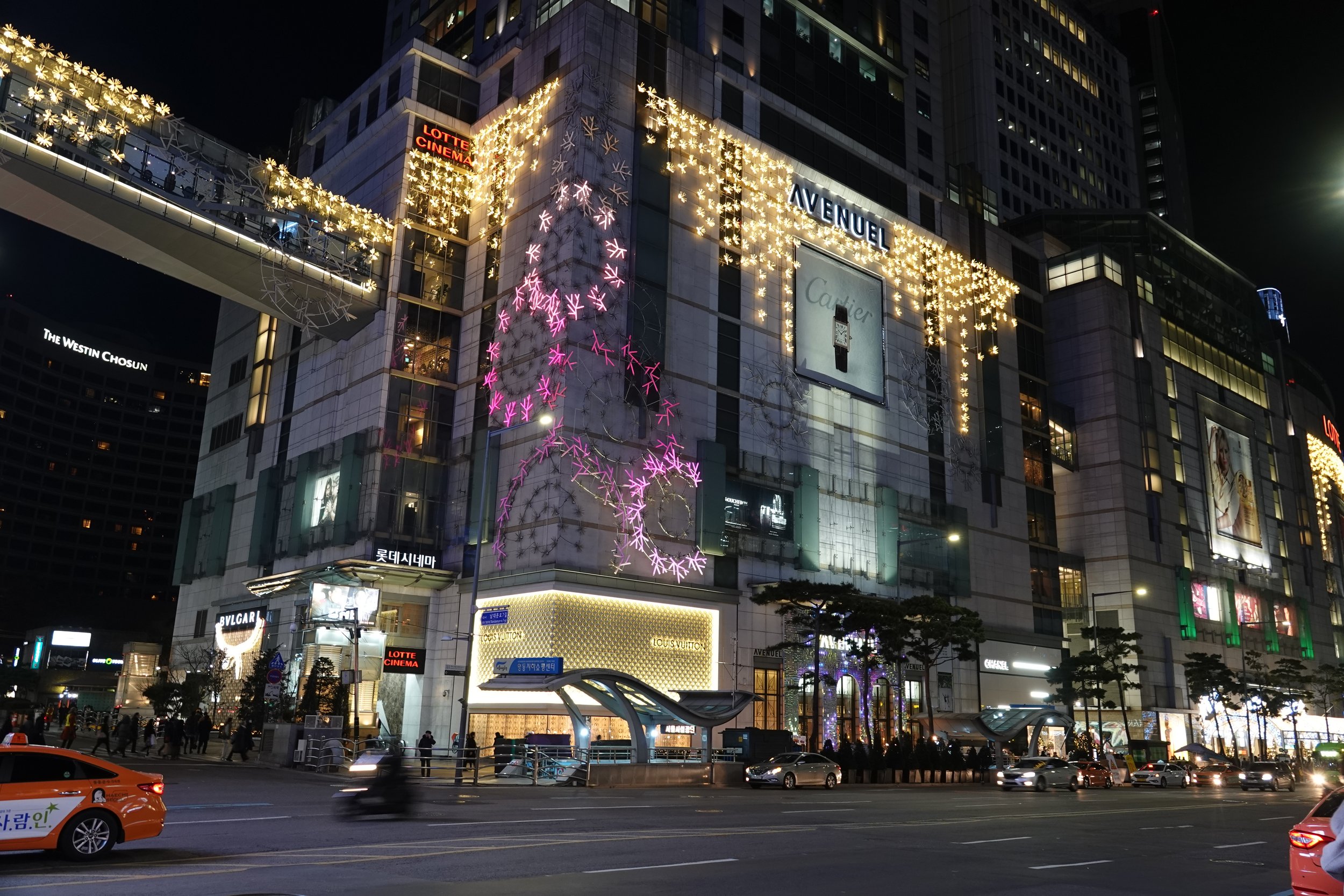
When leaders talk about transformation, the conversation usually begins with strategy, technology, or market forecasts. But as we often stress at Learning Expedition:
transformation rarely happens in meeting rooms.
It happens when leadership teams confront unfamiliar realities, observe new consumer behaviour firsthand, and see how other industries solve problems they don’t even have the vocabulary for yet.
This was the premise behind a proposed Learning Expedition to South Korea for the strategy division of a major Middle Eastern luxury retail group – a programme designed not to teach, but to expose, provoke, and activate.
For them, the goal was simple: Experience the future of consumer culture.
Why Korea? Why Now?
South Korea has become one of the most influential consumer ecosystems in the world – shaping beauty, entertainment, youth culture, and experiential retail with a velocity few markets can match.
Here, trends do not trickle. They explode, fragment, commercialise, and become mainstream in record time.
From hyper-personalised beauty tech to K-pop fandom economies, from phygital retail to digital-native brand ecosystems, Korean innovators demonstrate a capacity that many Western organisations still struggle to replicate: the ability to move from trend → subculture → monetisation → identity → mainstream with astonishing speed.
South Korea isn’t just a destination. It is a living laboratory of leadership learning.
The Expedition Design: Exposure → Inspiration → Activation
Our expedition is not a corporate tour. They are structured learning environments that turn experience into strategy.
1. Exposure – curated market encounters
Participants meet the market where culture is made, not where it is studied.
The itinerary included:
Start-up accelerators in beauty and consumer tech
Flagship retail experiences built around an “anti-store” philosophy: curation, community, immersion
Digital-native founders leveraging data, fandom, and social capital
Innovation labs exploring automation, personalisation, and service design
This first stage is often the moment when leaders realise a truth no slide deck can deliver: the rules they operate under are not universal – they are contextual, cultural, and temporary.
2. Inspiration – guided synthesis
Immersion without meaning is tourism. Learning happens when experience is paired with reflection.
Every afternoon, the programme shifts into facilitated synthesis:
What behaviours did we observe?
What surprised us?
What assumptions did we arrive with?
Which consumer truths are emerging here before they appear elsewhere?
These sessions surface patterns – the connective tissue between culture, commerce, and leadership decisions. This is often where the first “aha” moment occurs, not in the site visits themselves, but in the interpretation of them.
3. Activation – turning insight into strategy
This is where most leadership programmes fail. They end at inspiration. Our expedition ends with action.
On the final day, participants co-develop a 90-day rollout plan – mapping each insight back to the organisation:
What can be adopted immediately?
What should be tested?
What needs reframing?
Who owns it?
What would success look like in a quarter?
90 days = one business quarter. Not a keynote. Not inspiration with no accountability. A plan.
What Made This Korea Expedition Different
Unlike standard immersion trips, this expedition included pre-departure learning, on-site facilitation, and structured debriefing, ensuring ideas didn’t evaporate on the plane home.
From the original proposal, the design incorporated:
A full-day seminar led by a luxury & customer experience expert prior to departure (Dubai) to contextualise market trends and phygital strategies
Two facilitated creative debriefings in Seoul to capture insights while still in the field
A co-development workshop to translate observations into formal business initiatives
Bilingual Korean/English facilitators to ensure meaningful dialogue with founders and innovators
Curated site visits, accelerator demos, and influencer meetings selected to match the client’s priorities
This level of preparation and synthesis is not decorative – it is the difference between inspiration and execution.
Why This All Matters
Deloitte’s 2025 Human Capital Trends highlights that organisations that expand employees' capacity to:
grow personally
think deeply
experiment creatively
are 1.8× more likely to outperform financially and 1.6× more likely to deliver meaningful work.
McKinsey adds that leadership development programmes that stick are those anchored to context, not curriculum. They succeed because they give leaders conditions, not instructions – space to interpret their environment differently.
This is why our expedition is not a conference or tour. They are structured experiences designed to provoke responsible discomfort – and convert that discomfort into capability, insight, and innovation.
A Case Study in Customisation, Not Tourism
Every element of this Korea expedition was engineered around the organisation’s strategic priorities:
Gen Z consumer behaviour and micro-cultural segmentation
Cross-industry innovation and omni-channel commerce
The shift from loyalty → fandom → identity
The role of physical spaces in digital-first brands
If your leadership team is ready to learn through experience, not PowerPoint, we’d love to explore what an expedition could look like for you.